|
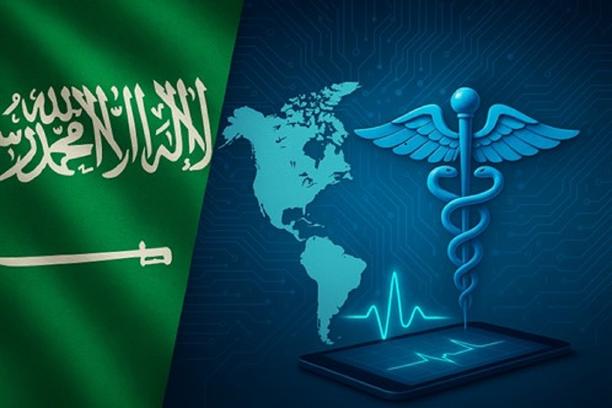
But what sets Saudi Arabia apart is its pace. Unlike the incrementalism often seen in mature economies, the Kingdom is deploying capital, policy, and partnerships at speed. For companies in digital health and AI-enabled MedTech, Saudi is emerging not just as a new market - but as a living laboratory for scaled innovation and future-ready deployment.
The MedTech Opportunity
Healthcare is no longer just a pillar of Saudi Arabia’s reform agenda - it has become the Kingdom’s testing ground for a digitally empowered, future-ready health system. With a population expected to exceed 40M by 2030 and life expectancy projected to rise from 74 to 78 years, the pressure on healthcare infrastructure is intensifying. Chronic diseases such as diabetes and cardiovascular conditions are increasing, with diabetes alone affecting ~18% of the adult population. These demographic and epidemiological shifts are driving demand for scalable, tech-enabled healthcare solutions that can deliver quality care across an increasingly complex landscape.
To meet this challenge, the Kingdom is investing in the reinvention of its healthcare ecosystem. The Health Sector Transformation Program is central to this push, targeting increased private sector participation, digitised care pathways, and enhanced patient access. A standout initiative is Seha Virtual Hospital - the largest of its kind in the Middle East - designed to deliver specialist care remotely to underserved areas using AI and telehealth tools. Meanwhile, billions are being invested in futuristic medical cities and digital-first centres of excellence in oncology, cardiology, and robotic surgery.
Saudi Arabia is reimagining the healthcare delivery model. Its ambition is to transition from reactive, episodic care to predictive, personalised, and preventive care. This vision is tailor-made for next-generation MedTech. The Kingdom is piloting AI-powered imaging to address specialist shortages, deploying wearable sensors and remote monitoring in rural clinics, and integrating robotic-assisted surgery into its smart hospital agenda. For US MedTech firms, this is not a market waiting to catch up - it is a stage for leadership, partnership, and real-time innovation.
Why US MedTech Should Lean In
For US MedTech firms - especially those encumbered by aging hardware-centric portfolios - Saudi Arabia represents more than a promising growth market. It is emerging as a launchpad for reinvention. As the Kingdom digitises its healthcare ecosystem, it offers a sandbox where American innovation can be adapted, tested, and scaled with speed and institutional support.
At the heart of this transformation is HUMAIN, which sits at the intersection of healthcare, AI, and national strategy, and is quickly establishing itself as a pivotal force in the Kingdom’s transition from an oil-reliant economy to one driven by technology and knowledge. Its mission - to reimagine the future of healthcare through AI and integrated digital platforms - aligns with the capabilities and ambitions of leading US MedTech players.
Strategically, the conditions are compelling. Saudi Arabia’s regulatory framework is notably more agile than those in the US or EU, allowing for accelerated time to market. Per capita healthcare spending is projected to reach >$3,000 by 2026, among the highest in the region. Bolstered by government capital through agencies like the Public Investment Fund (PIF), initiatives such as HUMAIN are not just aspirational - they are well-capitalised and execution-driven.
This presents an opportunity for US MedTech incumbents to breathe new life into legacy technologies. AI can be embedded into diagnostic platforms, connectivity added to clinical hardware, and real-time analytics integrated into patient monitoring systems. The Kingdom’s appetite for collaborative innovation further opens doors to joint ventures and localisation strategies.
The momentum is real. GE Healthcare is digitising multiple hospitals across the Kingdom using AI-powered imaging and enterprise platforms. Meanwhile, Philips’ partnership with the Ministry of Health to deploy tele-ICU and remote monitoring solutions - though a non-US example - demonstrates Saudi Arabia’s readiness to leapfrog into digitally enabled care.
In short, Saudi Arabia is not just open to US MedTech - it is actively inviting it to help shape the next global era of healthcare. With HUMAIN leading the charge, the Kingdom is positioning itself as both a partner and a proving ground for what’s next.
Strategic Recalibration: From Exporters to Ecosystem Builders
To seize the full scope of opportunity in Saudi Arabia, US MedTech firms must go far beyond product export. This is not a market that rewards transactional thinking - it demands a shift in strategy, structure, and mindset. The Kingdom is no longer a secondary geography; it is fast emerging as a critical engine of global health innovation. Firms that continue to treat the Middle East as peripheral risk irrelevance in a region where health reform is not incremental but transformational.
The first pivot is attitudinal: US companies must reframe Saudi Arabia as a priority innovation hub, not a sales territory. This means embedding locally - both intellectually and operationally. R&D partnerships with Saudi institutions, the establishment of regional innovation laboratories, and the tailoring of go-to-market strategies to align with Vision 2030's public-private partnership model are now strategic imperatives, not optional enhancements.
Talent localisation is another decisive lever. Building and empowering Saudi healthcare talent is not just a compliance play - it is a strategic asset that unlocks trust, relevance, and long-term influence within the national ecosystem. The government’s Saudisation drive and investment in health education infrastructure make this both feasible and urgent.
Equally critical is a data-forward strategy. Saudi Arabia is rapidly scaling its digital health and informatics infrastructure, including the National Platform for Health Data and AI-enabled population health initiatives. These create fertile ground for US firms to co-create evidence-backed solutions, leveraging real-world evidence for local validation, regulatory alignment, and faster adoption cycles. Engagement with government-backed platforms such as the Health Holding Company and the Saudi Data and AI Authority (SDAIA) offers a pipeline into national priorities and deployment pathways.
Consider how GE Healthcare has positioned itself - not simply as a vendor, but as a strategic co-developer - aligning with national digitisation objectives to co-create AI-powered imaging technologies bespoke to local clinical needs. This model of partnership should be the rule, not the exception. US firms would be wise to establish durable relationships with institutions such as King Faisal Specialist Hospital and Research Centre, King Abdullah International Medical Research Centre, or NEOM’s emerging biotech cluster - leveraging them not just as distribution nodes, but as platforms for collaborative innovation.
Put simply, succeeding in Saudi Arabia requires more than market entry - it requires ecosystem integration. The Kingdom rewards those who invest, localise, and co-create. For US MedTech, the path forward is clear: build with Saudi Arabia, not merely in it.
Takeaways
For US MedTech, the next major move is not another product refresh or pricing gimmick - it is a bold pivot. The opportunity lies not in saturated Western markets but in high-velocity regions rewriting the rules. Nowhere is this shift more urgent - or more promising - than in Saudi Arabia.
This is a nation not tinkering at the margins but rebuilding healthcare from the ground up. With massive investments in AI, digital infrastructure, and care delivery, Saudi Arabia is positioning itself as a global laboratory for next-gen healthcare. It is not following trends - it is setting them.
For US MedTech companies, the time to engage is now. Early movers will not just unlock new revenue - they will help shape a national transformation. They will co-create with a government that is not only open to innovation but actively engineering it. Firms like GE Healthcare are already embedding into this momentum. The window is open, but it will not stay that way for long.
This is more than a growth market. It is a strategic inflection point. The winners will be those who align not just with capital, but with conviction - those who see Saudi Arabia not as an outlier, but as the vanguard of global healthcare reinvention. The Kingdom is not playing catch-up. It is taking the lead. The question for US MedTech is not whether the market is ready - but whether they are.
|







Comments