Tag

Tagged: talent retention

Sponsored
  • Legacy MedTech's decline is chronic and systemic, not a cyclical setback 
  • Leadership’s focus on short-term gains hinders long-term renewal
  • A five-pillar blueprint outlines how to rebuild relevance through digital, platform, and patient-first strategies
  • Mindset transformation is essential: from quarterly reflexes to future-focused leadership
  • Inaction is costly; only bold, strategic moves can counter rising structural and competitive threats

Think Bold Act Smart

On May 7, 2025, HealthPad published a provocative Commentary, MedTech’s Blueprint for Failure, arguing that the industry's crisis is not cyclical - but structural. A handful of elite firms continue to outperform, yet a long tail of underachievers grows more exposed and fragmented. Capital and confidence flow to the few; the rest are left treading water.

This is not a failure of operational know-how. It is a failure of mindset. MedTech leaders - particularly in struggling firms - are trapped in the tyranny of short-term performance. Quarterly earnings dominate attention, leaving little bandwidth for strategic pivots. As a result, imperatives like AI, digital therapeutics, patient empowerment, ESG, and value-based care are sidelined - not for lack of vision, but because they seem like luxuries amid firefighting.

The analogy is clinical: like patients who dismiss early signs of chronic illness, many MedTech firms misread weak signals - innovation fatigue, vanishing product differentiation, talent attrition - as non-urgent. Comforted by legacy KPIs and familiar processes, they miss the onset of decline. By the time symptoms worsen, remedies are limited.

This is not dramatic collapse - it is slow erosion. And it is becoming endemic. Former high-flyers now face falling valuations, stagnation, outdated leadership, and mounting regulatory pressures. Yet even as they spiral into defensive postures, they cling to the false prudence of operational modifications over strategic reinvention.

Investors are not looking for recovery - they are looking for renewal. Leaders must act now, not just to repair, but to reimagine. Because those who just fix the past will be eclipsed by those building what is next.

 
In this Commentary

This Commentary offers a counterpoint to the earlier “MedTech’s Blueprint for Failure”, which highlighted the significance of shifting the focus from short-term symptom management to long-term systemic renewal. If MedTech’s ailments are chronic, the remedy must go beyond operational repairs to address the cultural rift between legacy leadership and the demands of a digital, patient-centric era. This is not about weathering another earnings cycle - it is about acting decisively before the market forces change upon you. Even under pressure, MedTech leaders must pursue a holistic, adaptable transformation strategy - one that reclaims relevance in a sector being reshaped by innovation and evolving expectations.
 
Diagnosis Confirmed
 
Chronic Decline, not a Temporary Setback
 
What once drove MedTech’s success is now its liability. Like a patient in the early stages of chronic illness, the industry is not unaware - it is falsely reassured. The symptoms are there: stalled innovation, thinning differentiation, quiet attrition. But the absence of acute crisis masks the reality of structural decline.

This is not about incompetence - it is complacency. MedTech firms that once dominated by optimising for scale and efficiency are now applying outdated logic to a changed landscape. The metrics still look familiar, the routines still run - but the market has moved on.

Healthcare is not undergoing a sudden disruption; it is experiencing a slow, systemic shift. And like the onset of chronic disease, that change is easy to ignore - until it is too late. MedTech’s failure to confront early signals has dulled its instincts, hardened risk aversion, and widened its blind spots. The slow pace of decline makes it easy to rationalise. That is what makes it so dangerous.

This is not a slump. It is a slow bleed. Over the past decade, many MedTechs have starved their future relevance by clinging to legacy businesses. By the time the damage becomes undeniable, talent has left, capital has fled, and competitors have reinvented the rules.

This is not random deterioration - it is strategic atrophy. And like any degenerative condition, it will not respond to cosmetic adjustments. Optimising legacy systems without redefining purpose is like treating organ failure with aspirin. It may dull the pain - but the collapse will continue. Without reinvention, decline is not just possible. It is inevitable.

 
The Danger of Treating Symptoms Instead of the Disease

Legacy MedTech is stuck in a cycle of symptom management - treating surface-level issues while the underlying condition festers. Tactics like spending freezes, SKU cuts, and compliance overhauls create the illusion of control, but they rarely lead to transformation. These are not strategic shifts; they are coping mechanisms.

Yes, addressing debt, regulation, and margin pressure is necessary - but it is triage, not treatment. These moves may stabilise the patient, but they do not restore health. Worse, they offer false reassurance, allowing leadership to sidestep important questions: What is the business of our business? How do we stay relevant in a system now shaped by platforms, data, and patient autonomy?

The danger lies in defaulting to familiar playbooks. What once felt safe - efficiency, standardisation, scale - is now a liability in a world pivoting to digital, decentralised, and outcomes-driven care. Recycling old strategies for new realities deepens the strategic inertia that is eroding long-term viability.

This is not about tightening bolts on a ship already adrift. It is about redesigning the vessel - its structure, purpose, and direction - before the rising tide of healthcare transformation makes any course correction irrelevant.

End of the Pitch


The new episode of HealthPadTalks is available. Listen now!
A New Strategic Immune System
 
Five Pillars of MedTech Renewal

This is the inflection point - and for many underperforming MedTechs, it arrives amid a perfect storm: mounting debt ceilings, aging leadership teams, regulatory remediation, declining valuations, flatlining growth, and portfolios anchored in slow-growth markets. These compounding pressures make strategic pivoting feel not only daunting but, at times, impossible. And yet, standing still is not an option. Recovery from chronic decline will not come through marginal reform or operational fixes; it demands a systemic overhaul - a new strategic immune system. One not built to defend legacy structures, but to cultivate relevance, reinvention, and resilience in a healthcare ecosystem evolving faster than most executives have prepared for. Navigating this transition requires pragmatism, but also urgency - a readiness to tackle immediate constraints while laying the groundwork for long-term renewal.

What follows is a blueprint for regeneration. A transformation rooted in five shifts, each essential for restoring adaptive strength and ensuring long-term viability.

1. Relevance-First Leadership
The future will not be shaped by leaders who cling to control, but by those who embrace curiosity, adaptability, and - crucially - humility. In a rapidly evolving healthcare landscape, humility is not weakness; it is a strategic strength. It allows leaders to acknowledge what they do not know, create space for new voices, and adapt in the face of complexity. Legacy experience must converge with emerging insight. This requires building leadership teams that integrate institutional knowledge with the perspectives of digital natives, global innovators, patient advocates, and platform strategists. Boards and C-suites can no longer mirror only the industry’s past - they must be designed to anticipate and shape its future.

2. A Digital and Data-Driven Core
While physical devices remain foundational, the value in MedTech will increasingly come from data - how it is captured, connected, and converted into insight. Building a digital and data-driven core means embedding AI, machine learning, and predictive analytics into every layer of the business - from R&D and clinical development to commercial strategy and post-market engagement. The shift is from managing products to unlocking intelligence. MedTech leaders must evolve their operating models to reflect this new reality: treating software not as an add-on, but as a central engine of growth. This requires three moves: (i) constructing a modern tech stack (across engagement, intelligence, and infrastructure), (ii) adopting agile development practices within a regulated environment, and (iii) securing the right mix of digital talent and IP.

3. Platform and Ecosystem Thinking
The traditional MedTech sales model - built on hardware-first, product-centric strategies and long, transactional sales cycles - is no longer fit for purpose. It is dying. As the healthcare landscape evolves, monolithic business models are giving way to modular, connected ecosystems that prioritise flexibility, speed, and outcomes over proprietary control.

Yet, many MedTech organisations remain slow to adapt, weighed down not only by traditional systems but by legacy mindsets. A large share of industry leadership consists of digital immigrants - executives whose formative years predate the platform economy. As a result, strategic transformation is often constrained by outdated assumptions and a reluctance to embrace the principles of interoperability, data liquidity, and open collaboration.

The future will belong to leaders who do not try to own the stack but rather enable it. This means designing for interoperability from the ground up, treating open APIs as foundational infrastructure, and cultivating partnerships across software, services, and adjacent sectors. Siloed value chains must be dismantled in favour of dynamic, cross-functional networks that accelerate innovation and scale seamlessly across care pathways. The winners will think in platforms, build for ecosystems, and act with the urgency that today’s healthcare demands.

4. Rethinking Global Growth
The 85% of the world’s population living outside North America and Europe - contributing ~40% of global GDP - can no longer be treated as a strategic afterthought. Africa, India, the Middle East, and Latin America are not “too complex” to engage; they are too consequential to overlook.

Future growth in MedTech will not be driven by retrofitting Western models for emerging markets. It will come from reimagining value creation through digital-first delivery, radical affordability, and contextual innovation. These regions demand solutions designed for their realities - not watered-down versions of legacy products, but purpose-built offerings that address structural gaps with creativity and scalability.

Success will hinge on shifting decision-making closer to the ground. Empowered, locally rooted teams - not distant headquarters - must lead the charge, combining cultural fluency with entrepreneurial agility. What was once seen as peripheral or optional must now be reframed as central to any strategy.

In a world where innovation is increasingly decentralised and demand is global, ignoring emerging markets is no longer just shortsighted - it is strategically negligent.

5. Patient Agency and Health Equity by Design
The era of the passive patient is over. Today’s healthcare consumer is a data steward, informed decision-maker, and empowered participant in a dynamic marketplace. Transparency, interoperability, and collaborative innovation are no longer aspirational ideals - they are essential pillars of modern healthcare. Health equity is not a charitable endeavour; it is a strategic imperative. Meaningful inclusion must be embedded into the fabric of clinical trials, go-to-market strategies, and product development from the outset - not as an afterthought, but as a competitive advantage.

This is not a matter of modernising the margins - it is about reprogramming the organisational DNA. These five pillars lay the foundation for a strategic reset that positions MedTech companies not only to weather the next wave of disruption, but to actively shape it. In this context, boards - especially of underperforming firms - must recognise that strategy is their remit. The responsibility to provide clear, forward-looking leadership is not optional; it is imperative. Now more than ever, they are expected to not only answer critical questions, but to define the path ahead.
HealthPadTalks is a podcast exploring the trends redefining healthcare’s future. Building on HealthPad’s Commentaries, we don’t just deliver answers — we question them. Through bold ideas, diverse voices, and meaningful debate, we aim to improve outcomes, cut costs, and expand access for all. Make sure to follow us! 
Culture Reset
 
From Quarterly Thinking to Decade-Building
 
If legacy MedTech is serious about renewal, the transformation must begin not with tech or devices - but with mindset. The core barrier is not capital, capability, or intent. It is cultural inertia. Years of debt-fuelled M&A have hardwired a belief that scale equals strength. But in chasing size, agility has been sacrificed.

This is an industry built for quarterly wins, not long-term breakthroughs. It struggles to balance innovation with operational demands, future-building with present pressures. As long as that remains true, transformation will stay stuck in PowerPoint.

Under stress, leaders tend to default to familiar moves: cut costs, chase efficiency, avoid risk. Rational, maybe - but it is a slow bleed. The fixation on short-term certainty starves long-term relevance. Breaking the cycle requires a cultural reset. Governance, incentives, and investor narratives must shift to reward boldness, not just margin defence. Cost control is discipline - not direction.

Enduring relevance demands experimentation, resilience, and the courage to embrace uncertainty. The future of healthcare will not unfold predictably - and strategy must be just as nonlinear. Scenario thinking and foresight must move from the occasional offsite to everyday practice. Cultures built for control will not survive a system defined by speed and flux. The winners will not be the biggest. They will be the most adaptive. The era of maintenance is over. This is the era of builders.

 
Navigating the Transformation
 
 From Theory to Execution in a Constrained Reality
 
Transformation, when spoken of in White Papers and keynote speeches, can feel abstract - aspirational but detached. For many legacy MedTech executives, the reality is less forgiving. High debt loads, remediation demands from FDA warning letters, tariff volatility, and investor scrutiny do not create fertile ground for reinvention. But this is why transformation must be pragmatic, not theoretical. It must be built into the constraints - not postponed because of them.

Legacy MedTech needs a roadmap - focused, executable, and achievable within 12–36-months. This horizon will not solve everything, but it can move a company from reactive to revitalised.


Phase 1   Audit the Blind Spots
Begin with transparency - transformation is impossible without a clear view of reality. This is more than performance dashboards and metrics reviews; it means surfacing the inconvenient truths the organisation would rather ignore. Strategic blind spots - whether digital inertia, talent erosion, or cultural rigidity - must be connected to operational symptoms: compliance exposure, stagnant innovation, declining revenues, and loss of market relevance.

The critical questions are simple but uncomfortable: where are we falling behind? And more provocatively, who on the leadership team is equipped to close those gaps?

Too often, leadership structures are relics of past successes or the byproduct of internal politics, not instruments of forward strategy. Updating the playbook is hard enough, replacing the players can feel institutionally threatening. In a resource-constrained environment, such recalibration is not just difficult; it can seem impossible. But avoiding it guarantees strategic drift.

Consider Philips in the early 2010s - a company that confronted similar institutional inertia. By recalibrating its leadership and shedding legacy assets, it made space for renewal. The lesson: pruning is not failure. It is a precondition for reinvention. Clinging to outdated leadership logic may feel safe, but it is often the most expensive risk of all.


Phase 2   Build the Digital Spine - Without Breaking the Bank
Relevance in today’s healthcare landscape does not demand overnight reinvention - but it does necessitate a shift. The move from product-centric models to data-driven infrastructure is not a cosmetic change; it is a structural one. And it will not come easily. Many company executives, and board directors, shaped by the conventions of a prior industry era, are unprepared to navigate this transformation. Their frameworks for success were forged in a context that is rapidly dissolving under the weight of digital acceleration and new market expectations.

Still, even amid fiscal constraints, organisations can make meaningful progress. Targeted investments in interoperable systems, AI-readiness, and API-friendly platforms can unlock new revenue streams, enhance responsiveness to regulatory demands, and enable smarter scaling. Consider GE Healthcare’s collaboration with Lunit, a South Korean medical AI start-up. This was not an expensive moonshot - it was a deliberate, strategic bolt-on. And yet, it yielded an outsized impact: democratising access to AI-driven diagnostics, easing clinician burden, and transforming data from a passive byproduct into an active engine of value creation and improved patient outcomes.


Phase 3  Pilot the Future Under Pressure
Transformation does not need to start at scale - it needs to start with evidence. While impact is often equated with size, the catalyst for meaningful change is proof, not breadth. Decades of debt-fuelled expansion have conditioned many executive mindsets to pursue scale as a default strategy. But in today’s MedTech landscape, progress requires a shift: rather than relying on traditional commercial playbooks, leaders must learn to spot edge opportunities - underpenetrated specialties, digitally neglected workflows, or adjacent markets - where focused, agile pilots can generate rapid, high-signal validation. Scale should follow insight, not precede it.

A case in point: Medtronic’s GI Genius. Rather than pursuing a traditional go-to-market strategy, the company partnered leanly with Cosmo Pharmaceuticals to launch internationally. The result? A low-risk initiative that offered high learning value and future-facing positioning. Especially in capital-constrained environments, such pilots play a dual role: they reduce exposure while broadcasting a message of strategic direction.

For those unfamiliar with this playbook, the goal is not to "prove" transformation in theory, but to earn credibility through compact, collaborative experimentation.
Lead the Shift or Be Left Behind

Transformation under constraint is not a contradiction - it is how reinvention starts. But for many MedTech leaders, shaped by years of easy capital and unchecked growth, this moment demands a mindset shift. The old playbook - incrementalism, deferring tough calls, avoiding trade-offs - is no longer viable.

Sustainable growth now depends on confronting inefficiencies, making hard decisions, and reallocating resources with intent. What once looked like manageable underperformance is now a strategic liability.

Those who shift from reactive management to deliberate reinvention - who sunset legacy assets, make bold hires, and place focused, future-facing bets - will not just survive, but will lead. In this new era, capital discipline, digital fluency, and courage are the currencies of leadership.

 
The Cost of Strategic Inaction
 
Acquisition, Obsolescence - or Worse
 
In today’s MedTech landscape, inaction is not neutral - it compounds decline. What may seem like prudent caution often conceals a more insidious risk: mistaking activity for strategy. This is especially true when organisations become fixated on remediation efforts - resolving FDA warning letters, mending broken processes, or addressing legacy compliance gaps. While these actions are essential, treating them as the sole focus can be fatal. Remediation alone is not a growth strategy; it is a baseline obligation. In a sector shaped by regulatory scrutiny, pricing pressures, and tighter capital, standing still may feel responsible - but the market does not reward stability without progress. It penalises hesitation with eroding relevance, diminished market share, and vulnerability to more adaptive, forward-leaning competitors.

Look no further than recent cautionary tales. Zimmer Biomet’s divestiture of its spine and dental units was framed as strategic - but it was a move to stem margin erosion and recalibrate under pressure. Olympus’ spin-off of its imaging division was not innovation - it was a retreat from a legacy asset that had lost its edge. These were not proactive plays - they were forced responses to long-ignored relevance gaps. These outcomes are not isolated missteps. They are predictable endpoints of sustained strategic inertia.

Meanwhile, capital is flowing toward businesses designed for speed, intelligence, and adaptability. Investors - whether private equity or strategic - are backing AI-native platforms, remote diagnostics, and software-centric care models. Not because of hype, but because such companies are built for scale, flexibility, and user-centric value. Consider Butterfly Network: a company that did not just reimagine ultrasound hardware - it redefined its pricing, access, and clinical utility. In doing so, it captured investor interest that legacy players could not.

In this environment, relevance is not a nice-to-have - it is a prerequisite for survival. MedTech incumbents with shrinking multiples and swelling debt burdens may be tempted to preserve what is left. But without a clear path to future fit, preservation turns into liquidation. If you do not disrupt your own model, the market will - then acquire what remains at a discount, restructure it, and extract the value you failed to unlock.

The window for incrementalism has closed. The market is not waiting for laggards to catch up. It is rewarding the bold, bypassing the static, and writing off those who stay silent too long. The only risk now is pretending there is still time.

 
Takeaways

The era of comforting narratives is over. Legacy is not a shield - it is a mirror, reflecting both past success and deferred decisions. MedTech is not on the brink of reinvention; it is at risk of fading relevance, mistaking historical resilience for future readiness.

Cost-cutting is not a growth strategy. Reorgs will not rebuild capability. And digital fluency cannot be postponed. Declining margins, stagnant pipelines, talent attrition, and waning physician mindshare are not anomalies - they are symptoms of strategic drift. This is not a call for disruption for disruption’s sake. It is a call for disciplined boldness: to rethink sacred assumptions, redefine organisational identity, and lead with clarity, not caution. The path forward is not abstract: (i) Rewire leadership incentives for long-term value, (ii) Build a digital core - not digital cosmetics, (iii) Shift from closed systems to open platforms, (iv) Treat equity and patient agency as strategy, not compliance, and (v) Invest where others overlook.

Yes, headwinds are real. But they are not reasons to stall - they are reasons to act. The future is not inevitable. But it is still available - to those who move first, think deeper, and lead with intent. MedTech must choose and shape what is next or become a footnote in someone else’s strategy.
view in full page
  • In 2024, Gen Z surpassed Baby Boomers in the US workforce, triggering cultural shifts
  • Their emphasis on flexibility, purpose, and mental health may amplify professional restlessness, pushing organisations to adapt
  • Gen Z employees may seek change after a few years, driven by unmet expectations, a desire for impact, and a need for novelty
  • Addressing this "seven-year itch" through growth opportunities and meaningful engagement can help retain top talent
  • This Commentary provides actionable strategies to align with Gen Z priorities, essential for attracting and keeping young leaders
 
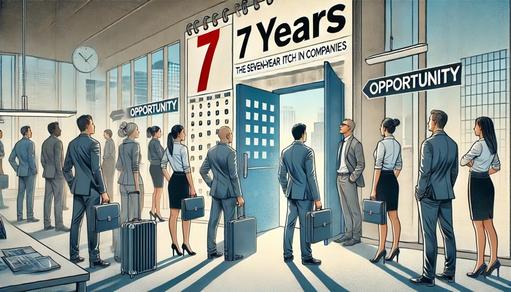
The Seven-Year 'Itch' in Companies

The workplace is undergoing a generational shift, with Generation Z (Gen Z) surpassing Baby Boomers in 2024 as the largest group in the US full-time workforce. This transformation introduces a new set of values, expectations, and behaviours that challenge traditional workplace norms. Gen Z’s ethos - characterised by a strong emphasis on purpose, flexibility, and inclusivity - may accelerate cycles of professional restlessness, reshaping the structures and dynamics of modern organisations.

The concept of the "seven-year itch", often associated with phases of dissatisfaction in personal relationships, finds a parallel in the corporate world. Employees, particularly those who feel their career trajectories have stagnated, frequently experience similar restlessness after years in the same role or organisation. This professional “itch” often arises from unmet expectations, a lack of growth opportunities, and the intrinsic human desire for change.

For leaders, this turning point can prompt a reassessment of goals, ambitions, and alignment with organisational values. Without meaningful challenges or a clear path forward, many employees are driven to explore new opportunities - not from disloyalty, but from a need for professional fulfilment and purpose. Like personal relationships, professional careers often begin with optimism and ambition, yet can become routine as visionary goals give way to operational demands. Recognising and addressing this restlessness is essential not only for individual growth but also for sustaining long-term organisational success in an evolving business landscape.

 
In this Commentary

This Commentary explores the concept of the "seven-year itch" in professional contexts, examining why employees often experience restlessness or dissatisfaction after a period in a role. It delves into the expectation gap, the search for impact, and the human need for novelty, highlighting organisational implications. The Commentary also considers how Generation Z's workplace values - such as flexibility, purpose, and mental health awareness - may accelerate this phenomenon, urging companies to adapt for sustained engagement and retention.
 
The Expectation Gap: A Key Catalyst for Discontent

The "seven-year itch" in a professional context often arises from a growing disparity between employees' aspirations and the realities of their role. This disconnect is likely to intensify as Gen Z increasingly replaces Baby Boomers in the workforce, reshaping workplace dynamics. For high achievers, who are accustomed to consistent recognition and advancement, such misalignment can be disheartening. Career trajectories often serve as a cornerstone of identity and self-worth, making stagnation - whether due to organisational barriers, limited promotional prospects, or uninspiring projects - feel personal. This divergence between ambition and reality fosters frustration, gradually eroding both satisfaction and motivation.

A Quest for Meaning and Impact
For many Gen Z employees, titles and compensation alone are insufficient; their drive is fuelled by the desire to create meaningful change. Yet, as time passes, some may find their influence waning, their ideas side-lined, or their contributions no longer yielding significant outcomes. This reduction of impact can lead to a sense of disillusionment, sparking a  search for roles or organisations where they can regain a sense of purpose, reconnect their efforts to meaningful outcomes, and align their work with their core values.

The Draw of Novelty and Renewal
Humans thrive on novelty, and employees are no exception. Just as personal relationships can lose their spark without renewal, professional roles can grow monotonous when stripped of fresh challenges. Many people excel in dynamic environments that require innovative thinking and problem-solving. When their roles become predictable or routine, the allure of a new setting - one that offers variety, fresh perspectives, and opportunities - becomes irresistible, compelling them to seek renewal in their careers.
 
Organisational Implications of the Professional Seven-Year Itch

Just as the "seven-year itch" can lead individuals in relationships to reconsider their commitments, a similar phenomenon in the corporate world prompts employees to question their professional loyalty. When growth, impact, and variety are lacking, talented individuals may feel driven to move on, seeking roles that better align with their aspirations for personal and professional fulfilment. Recognising this tendency is valuable for organisations, as it offers an opportunity to structure career paths that maintain people's engagement and satisfaction, potentially reducing turnover among high performers.
 
A Generational Shift: The Influence of Gen Z on the Seven-Year Itch
 
Smart leaders will recognise this shift as an opportunity rather than a disruption, proactively aligning organisational practices to these emerging priorities. By fostering purpose-driven cultures, embracing flexible work arrangements, investing in skills-based development, and prioritising mental health and wellness, forward-thinking executives can engage and retain Gen Z talent. Organisations that anticipate and respond to these expectations with agility and authenticity will not only adapt to the changing workforce but position themselves as employers of choice in an evolving business landscape. To assist in this regard, here are the changes Gen Z are expected to bring to workforces.

1. Purpose-Driven Work and Social Impact
Gen Z places a premium on purpose-driven careers, seeking roles that enable them to create a meaningful and positive impact. For this generation, work transcends financial security - it serves as a platform for driving societal and environmental change. Employers will increasingly face pressure to implement and transparently communicate socially responsible initiatives that resonate with these values. To attract and retain Gen Z talent, companies must embed these priorities into their operations, demonstrating a commitment to sustainable and ethical practices.

2. Digital Native Advantage and Technology Expectations
Raised in a tech-driven era, Gen Z has an innate proficiency with digital tools and a strong expectation for workplaces to match their technological fluency. They are drawn to companies that embrace innovation, prioritise cybersecurity, and adopt advanced, tech-enabled work models. Organisations slow to adapt risk losing out on this digitally savvy talent pool, as Gen Z seeks employers that leverage cutting-edge technologies and foster forward-thinking, agile environments.

3. Flexibility, Autonomy, and Work-Life Balance
The traditional 9-to-5 schedule often holds limited appeal for Gen Z, a generation that values flexibility, autonomy, and work-life balance. They are advocates for hybrid and remote roles, which empower them to manage their time more effectively and work in ways that align with their personal and professional priorities. To attract and retain this talent, companies must rethink conventional work structures, offering adaptable schedules and redefining career pathways to foster environments that prioritise individuality, productivity, and wellbeing.

4. Career Growth and Development Focus
Gen Z challenges the traditional career ladder by prioritising skills-based growth, lateral moves, and opportunities for continuous learning over hierarchical promotion. They value environments that provide regular feedback, mentorship, and diverse development opportunities, seeking roles that allow them to build adaptable, future-ready skill sets. This generational mindset motivates companies to rethink professional development strategies, investing in training programmes, mentorship initiatives, and personalised growth pathways.

5. Diversity, Equity, and Inclusion as Non-Negotiables
Diversity, equity, and inclusion (DEI) are non-negotiables for Gen Z, who expect meaningful and authentic efforts rather than gestures. This socially conscious generation values workplaces that champion inclusivity, representation, and fairness at every level. Companies that fail to cultivate a genuinely inclusive culture risk disengagement and high turnover among Gen Z employees. To meet these expectations, organisations must prioritise diverse hiring practices, implement impactful DEI training programmes, and establish equitable policies that foster belonging and promote long-term cultural change.

6. Mental Health Awareness and Wellness
Mental health is a priority for Gen Z, a generation that actively advocates for workplace wellness and openly addresses mental health challenges. They seek employers who normalise conversations around mental wellbeing and demonstrate a commitment to supporting it. To meet these expectations, companies must create a culture of psychological safety, offering comprehensive wellness programmes, flexible mental health days, and access to professional counselling as part of standard benefits. By prioritising mental health, organisations can foster a more engaged and resilient workforce.

7. Transparency and Trust
Transparency is a cornerstone value for Gen Z, who tend to be sceptical of organisations that operate without openness or clarity in decision-making. This generation seeks employers who foster trust through honest communication and actively involve employees in shaping workplace policies and strategies. To engage and retain Gen Z talent, companies must prioritise transparent leadership, encourage open dialogue, and create opportunities for meaningful employee input. By adopting these principles, organisations can build trust and strengthen their connection with this discerning workforce.

The findings from the 2024 CYPHER Learning study underscore these seven needs, revealing that tailored learning, supportive management, and trust are essential to retaining younger talented employees. By investing in customised training and development programmes, fostering transparency, and supporting mental health and wellness, companies can create environments that meet the evolving expectations of Gen Z, fostering long-term engagement and satisfaction in the workforce of tomorrow.

 
Takeaways

The "seven-year itch" in the workplace may be taking on a new, accelerated meaning as Gen Z reshapes workforce dynamics with their distinct values and priorities. This generation, entering their careers with a strong emphasis on growth, purpose, autonomy, and inclusivity, is driving an era where job satisfaction and organisational alignment are reassessed more frequently. Unlike previous generations, Gen Z's expectations for meaningful work and rapid professional development create a challenge - and an opportunity - for companies. Employers who embrace this shift by fostering environments of transparency, inclusivity, and flexibility will not only navigate higher turnover rates but also build stronger, more resilient teams. By prioritising professional development and aligning with the evolving expectations of their workforce, organisations can position themselves as leaders in attracting and retaining top talent in an era of dynamic workplace transformation. Recognising this shift is not optional but essential to thriving in the modern world of work.
view in full page