Dashboard

E-Commentary


Sponsored
joined 2 years, 4 months ago

Asian Dental Hospital - Kondapur

Asian Dental Hospital - Kondapur
Directory:
Expertise:

Asian Dental Clinic is a leading dental hospital in Kondapur/Gachibowli that prides on providing comprehensive care with the convenience of having all dental specialists under one roof.


Phone Number:
099592 87499


view this profile
joined 2 years, 4 months ago
Directory:
Expertise:

The foundation of our success lies in our commitment to individualized treatment. No two smiles are alike, and therefore, no two implant procedures should be either. At All Valley Dental, our team of expert Holladay dentists understands this implicitly. With profound respect for your unique dental anatomy, we meticulously design a treatment plan that addresses your specific needs. Whether you require single-tooth implants or multiple teeth restoration, we have the expertise to materialize your aspirations. A paramount feature of our practice is our utilization of cutting-edge technology. We pride ourselves on staying at the forefront of dental innovation, incorporating the latest advancements into our practice to ensure that our patients receive the highest quality care.


view this profile
joined 2 years, 4 months ago

Vasiliki Kolovou

Public health professor
Directory:
Expertise:

A public health professional with experience in applied public health initiatives both at individual and community level. The last three years I teach modules related to health sciences in nursing students in Hannover university of applied sciences and I am committed in bringing the perspective of health promotion in nursing 


view this profile
  • Photoplethysmography, commonly referred to as PPG, is a simple, non-invasive, and affordable technology used for monitoring heart rate, blood oxygen saturation, and other physiological parameters
  • PPG uses light to measure and analyze changes in blood volume, enabling the tracking of vital signs and assessment of cardiovascular health
  • With a growing interest in non-invasive physiological monitoring and a shift towards continuous and ubiquitous patient care, PPG has gained significant attention and provides alternatives to expensive, time-consuming, and invasive healthcare modalities
  • Many giant tech companies, including Apple, Google-Fitbit, and Samsung produce wearable products that incorporate PPG technology
  • PPG-driven devices are used by millions and have established a significant presence in healthcare and wellbeing
  • Despite its potential, PPG faces challenges that include signal variability, noise and artifact interference, which can distort the signal and hinder reliable information extraction
  • Overcoming these challenges will pave the way for pervasive adoption of PPG technology throughout healthcare
 
PPG technology: Unlocking the Potential of Healthcare
A Journey of Non-invasive Precision
 
This Commentary describes how photoplethysmography (PPG) has become a valuable tool in continuous vital sign monitoring, and exercise physiology, making it a promising avenue for improving patient care and empowering individuals to take better care of their health and wellbeing. PPG has the potential for many more non-invasive and affordable healthcare applications, providing alternatives to expensive, time consuming, and invasive methods. The technology benefits not only from the large and rapidly growing interest in non-invasive physiological tracking, but also from the paradigm shift in healthcare towards continuous and pervasive patient monitoring beyond traditional in-hospital care. This Commentary describes PPG, explores its applications in healthcare, highlights its advantages over traditional methods, and suggests that it has potential to disrupt the diagnosis and treatment of traumatic brain injury.
 
Photoplethysmography (PPG)
 
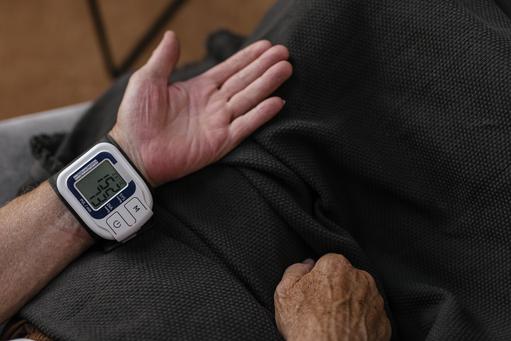
PPG is a non-invasive and straightforward measurement technology that utilizes a light source and a photodetector placed on the skin's surface to assess the variations in blood volume. Typically used for blood oxygen (SpO2) and heart rate monitoring, PPG sensors are commonly placed on the wrist or fingertip, where blood flow is close to the skin's surface. A light-emitting diode (LED) emits light into the tissue, and the photodetector captures the reflected or transmitted light, detecting changes in light absorption or reflection caused by fluctuations in blood volume. These fluctuations in light intensity are converted into electrical signals, which can be processed to determine SpO2 or heart rate levels.
 
The PPG signal, also known as the photoplethysmogram, is based on the principle that blood absorbs light, and this absorption changes as blood volume fluctuates with each heartbeat. When the heart pumps blood into the arteries during systole, the volume of blood in the arteries increases, leading to more light absorption. Conversely, during diastole when the heart relaxes, the blood volume in the arteries decreases, resulting in less light absorption. Analyzing these variations in transmitted or reflected light, the PPG signal provides information about pulsatile changes in blood flow and offers insights into peripheral vascular function, arterial stiffness, and other vascular characteristics.
 
PPG has several advantages, including its non-invasiveness, simplicity, and portability. Unlike other methods, it does not require needles or complex equipment, making it suitable for continuous monitoring in various settings. By providing physiological information about the cardiovascular system, PPG finds applications in vital sign monitoring, sleep apnea screening, exercise physiology, blood flow assessment, and continuous health tracking. The technology's convenience, affordability, and accessibility contribute to improved patient care and empower individuals to take a more proactive role in monitoring their health and wellbeing.
 
It is important to note that PPG provides only indirect measurements and does not offer detailed information about the underlying cardiovascular system. Its primary focus is on changes in blood volume. For accurate measurements in medical applications, calibration and validation against other gold standard techniques are necessary. Notwithstanding, PPG remains a healthcare technology with wide-ranging applications, serving as a valuable tool in enhancing healthcare monitoring and management.
 
Brief history

PPG has a history that spans several decades, with advancements and refinements in both the technique and its applications. Its foundations were laid in the 1930s when researchers began investigating the transmission and reflection of light through human tissues. The first PPG measurements were performed using mercury-filled plethysmographs and light sources like incandescent lamps. During this period, the technology was primarily used for studying changes in blood volume and its correlation with physiological events. In the 1950s, Karl Matthes invented the first practical PPG sensor, which utilized a red light-emitting diode (LED) and a phototransistor. Matthes's device was initially designed for measuring pulsations in the extremities and evaluating peripheral circulation. The technology gained further recognition in the 1970s with the introduction of pulse oximetry, when a combined PPG sensor and spectrophotometer were used to measure oxygen saturation (SpO2) non-invasively, providing a breakthrough in patient monitoring. Pulse oximetry enabled continuous SpO2 monitoring and changed the management of respiratory and cardiovascular conditions. In the 1980s and 1990s, the technology found applications beyond pulse oximetry, when its sensors were integrated into devices for measuring heart rate variability, blood pressure, and assessing autonomic nervous system functions. The use of PPG in wearable devices and ambulatory monitoring systems became more prevalent during this period. The 2000s saw miniaturization and the integration of PPG sensors into consumer electronics. Wearable fitness trackers, smartwatches, and pulse oximeters became popular, bringing PPG-based monitoring to the mainstream. The advent of smartphones further accelerated the adoption of PPG-based applications, with various health and wellness apps utilizing the technology for heart rate tracking and stress monitoring. Today, PPG continues to evolve with developments in sensor technology, signal processing algorithms, and expanding applications in healthcare, sports, and wellness monitoring. Ongoing research aims to enhance the accuracy and reliability of its measurements and explore its potential in areas such as vascular health assessment, sleep monitoring, early disease detection and the diagnosis and management of traumatic brain injury.
 
PPG applications

PPG applications include: (i) monitoring blood oxygen levels and heart rate in various healthcare settings, including hospitals, clinics, and homecare, to provide real-time information about a patient's cardiovascular status, allowing healthcare professionals to detect abnormalities or assess the effectiveness of treatments, (ii) sleep studies to detect respiratory events such as apnea [temporary cessation of breathing] and hypopnea [shallow breathing]. By monitoring changes in blood volume, the signals can identify disruptions in breathing patterns during sleep and help in diagnosing sleep-related disorders, (iii) fitness and sports settings to measure heart rate, assess the intensity of physical activity, and provide immediate feedback to individuals, helping them optimize their workout routines and monitor their cardiovascular response during exercise, (iv) assessing peripheral vascular functions to identify conditions like arterial stiffness or endothelial dysfunction, and (v) enabling continuous monitoring of heart rate and SpO2 levels, which facilitates early detection of potential health issues and encourages proactive healthcare management.
Over the past two decades, the increased adoption of PPG monitoring in medical technology has led to enhanced patient care, improved early detection of various health conditions, and facilitated remote patient monitoring, all contributing to more personalized and efficient healthcare delivery. This increased interest is underscored by the rise in research publications related to PPG over the past two decades. In 2000 the annual number of papers indexed in PubMed using the keywords "Photoplethysmography" or "Photoplethysmogram" was <50, but by 2022, had increased to ~500; an increase of ~900%. 

You might also like:
 
PPG products

Most tech giants have developed and commercialized PPG products. For instance, Apple has incorporated PPG sensors into its Apple Watch, which allow users to monitor their heart rate and receive notifications for abnormal heart rhythms. The latest Apple smartwatch (Apple 7) includes a US Food and Drug Administration (FDA) approved electrocardiogram (ECG), which employs an electrical heart sensor capable of alerting its user to abnormal heart rhythms. In January 2021, Google acquired Fitbit for US$2.1bn, and integrated PPG technology into its wearable fitness trackers. In 2022, Fitbit received clearance from the FDA for a new PPG-driven algorithm to identify atrial fibrillation (AF). Huawei, a leading Chinese multinational, has also implemented PPG sensors in its smartwatches and fitness bands. The Massimo Corporation, a MedTech known for its development of innovative monitoring solutions, has created PPG sensors, which are used in hospitals and medical settings to measure SpO2, pulse rate, and perfusion index. Garmin, a company in the field of GPS navigation and fitness technology, has incorporated PPG sensors into its smartwatches and fitness trackers. Garmin's PPG products also offer sleep and stress monitoring. Samsung a global South Korean electronics company, has also integrated PPG technology into its wearable devices, including smartwatches like its Galaxy Watch series. The company’s offerings provide similar functionalities to the products described here, allowing users to track their heart rate, monitor stress levels, and receive alerts for abnormal heart rate patterns. All these companies have leveraged PPG technology, coupled with complimentary technologies, to create wearable devices that provide users with health and wellness insights and enable individuals to monitor their vital signs conveniently and track their overall wellbeing.
 
Advantages of PPG devices

Non-invasive PPG-driven devices offer painless monitoring without invasive procedures or body sensors. By simply placing optical sensors on the skin, patients experience minimal discomfort, reduced infection risks, and uninterrupted daily activities. Comfortable for extended wear, these devices enhance patient compliance and overall experience. Compared to invasive techniques, PPG-driven devices are cost-effective and eliminate the need for expensive disposable sensors or frequent laboratory tests. Portable and incorporated into wearable devices like smartwatches or fingertip pulse oximeters, they enable remote monitoring, reducing hospital visits and providing accessibility, especially for patients in remote areas.
 
The technology provides real-time data and rapid feedback for most conditions it currently monitors. It allows healthcare professionals to quickly detect abnormalities and make timely decisions, while patients receive immediate feedback, empowering them to manage their wellbeing proactively. PPG data can be seamlessly integrated into healthcare systems to enhance efficiency. For instance, data can be wirelessly transmitted to electronic health records (EHR) for convenient analysis. Integration with telemedicine platforms enables remote consultations and real-time communication. By combining PPG data with other diagnostics, such as ECG or sleep monitoring, it supports accurate diagnoses.
 
Additional information carried by the PPG signal

The PPG signal carries additional diagnostic information, which includes pulse rate and rhythm analysis, blood pressure estimation and peripheral vascular assessment, and assessment. Pulse rate and rhythm analysis involve analyzing the timing and intensity of pulsations in blood vessels to assess the regularity and irregularity of the heartbeat. Abnormalities in pulse rate and rhythm can indicate cardiac conditions, such as arrhythmias, tachycardia [rapid heart rate], or bradycardia [slow heart rate]. Utilizing the PPG signal, blood pressure estimation can be performed by analyzing changes in blood volume and arterial pulsations, which is helpful for monitoring and managing hypertension or hypotension without the need for complicated procedures. The PPG signal facilitates the assessment of peripheral vascular functions by examining the shape, amplitude, and timing of pulsations in peripheral blood vessels, which help to detect conditions like peripheral artery disease and other vascular abnormalities. Also, insights into the functioning of the autonomic nervous system can be obtained from the PPG signal.
 
Challenges for PPG adoption

Notwithstanding the advantages of PPG-driven devices, they face challenges, which include, limited standardization and variability in PPG signal acquisition, noise, and artifact interference, regulatory considerations, and validation and user acceptance. Let us briefly consider these.
 
The lack of standardization in signal acquisition and processing is an obstacle for the further adoption of PPG devices. Different manufacturers may use varying sensor technologies, placement locations, or algorithms that lead to inconsistencies in the PPG signal quality and measurements, and this can affect the accuracy and reliability of PPG data, making it challenging to compare results across different devices or settings. Standardization efforts and guidelines are needed to ensure consistent and reliable PPG signal acquisition and interpretation.
 
Further, PPG signals are susceptible to various forms of noise and artifact interference, which can distort the signal, posing challenges to obtain reliable and accurate information. Environmental factors, such as ambient light, motion artifacts, and poor sensor contact with the skin, can introduce noise into the PPG signal. Additionally, physiological factors like skin pigmentation, tattoos, vasoconstriction, or motion-induced variations can also impact the quality of the PPG signal. Techniques for noise reduction, artifact detection, and signal processing are essential to improve the reliability of PPG measurements.
 
PPG-driven devices intended for medical use need to comply with regulatory requirements and undergo validation to ensure their safety, accuracy, and effectiveness. Obtaining approvals can be a complex and time-consuming process, requiring clinical studies and proof against gold standard methods. Adhering to official standards is necessary to establish the credibility and trustworthiness of PPG-driven devices in healthcare settings.
 
The adoption of any new technology in healthcare relies on user acceptance and trust. Users, including patients, healthcare professionals, and caregivers, may have reservations regarding the accuracy, reliability, and privacy of PPG-devices. Educating users about the benefits, limitations, and evidence supporting PPG technology is important to build trust and acceptance. Ensuring data security, privacy, and addressing concerns about data misuse or unauthorized access are also factors in fostering user acceptance and adoption of PPG devices.


You might also like:
PPG and traumatic brain injury

Given that these challenges can be effectively addressed, PPG technology is well positioned as a potential disruptive force in several fields of medical diagnostics and monitoring. For instance, PPG technology could transform the diagnosis and treatment of traumatic brain injury (TBI), a global public health concern. Each year, TBI impacts >50m individuals worldwide, creating a substantial economic burden, estimated at ~US$400bn annually. The US alone reports ~1.5m TBI survivors annually, with ~0.23m individuals enduring severe TBI resulting in hospitalizations, which each year costs ~US$32bn. The UK faces comparable challenges, with ~0.16m hospital admissions for TBI annually, costing the UK government ~£15bn (~US$19.3bn), accounting for ~0.8% of the nation's GDP.
A pivotal aspect in effectively managing TBI patients lies in the continuous monitoring of intracranial pressure (ICP), given its potential to cause complications. Despite the historical dominance of invasive modalities, such as monitoring ICP through a drilled hole in the patient's skull, progress in non-invasive alternatives has remained relatively stagnant over the past four decades. It seems reasonable to suggest that this is not solely due to technological limitations, but rather stems from insufficient investment in relevant R&D driven partly by the commercial interests of medical technology companies. Invasive techniques, although associated with drawbacks and risks, have maintained their market supremacy due to early development and commercialization.
 
Non-invasive measurement of ICP necessitates interdisciplinary collaboration, innovative approaches, and substantial research efforts. Inadequate R&D investment and support have hindered progress in this field, making it challenging to overcome inherent complexities and develop effective non-invasive methods. Governments bear a responsibility for public health and have a vested interest in discovering affordable and accessible methods for TBI diagnosis and treatment. By actively supporting PPG R&D, administrations can encourage innovation, stimulate healthy competition, and encourage patient-centric healthcare solutions. Non-invasive ICP measurement techniques offer several advantages for the management of TBI patients, which include minimized patient discomfort, reduced risk of infection, lower healthcare costs, and the capacity for continuous monitoring, enabling early detection of ICP fluctuations and timely interventions to prevent crises and further brain damage.
 
The recognition of these potential advantages underscores the necessity for increased R&D. Backing research into PPG technology aligns with broader objectives of promoting sustainable and cost-effective healthcare solutions. Non-invasive approaches, exemplified by PPG technology, have the capacity to reduce healthcare costs associated with invasive procedures, extended hospital stays, and post-operative care. Such potential advantages provide governments with an incentive to invest in PPG technology research, ultimately fostering enhanced quality of care for individuals affected by TBI while benefiting healthcare providers.
 
Takeaways

The benefits of PPG-driven technology in healthcare include non-invasiveness, patient comfort, and real-time data acquisition. Cost-effective and portable, PPG devices offer real-time feedback to patients and providers, improving healthcare efficiency and accessibility. Currently, PPG delivers advantages in various medical fields, such as cardiology, respiratory care, neurology, and fitness monitoring. In both inpatient and outpatient settings, the technology plays a role in diagnosing, monitoring, screening, and improving healthcare and wellbeing. It enables fast and accurate diagnoses of medical conditions, continuous monitoring of vital signs, and early detection of diseases like sleep apnea and hypertension. In addition, PPG supports fitness and wellness monitoring, providing real-time feedback for optimized workouts and overall wellbeing. Overcoming PPG’s challenges of standardization, noise interference, regulations, and user acceptance are crucial to unlocking its full potential.
view in full page
joined 2 years, 4 months ago

mark smith

Z care dental
Directory:
Expertise:

Z Dental Care in Portage Park, we are proud to offer a wide range of dental services including general dentistry, dental implants, Invisalign, and emergency services for all ages. Family dentistry is our specialty, and we are in network with all major insurances. No insurance? No problem. We are committed to providing the highest quality of care at an affordable price. For further details, please visit us.


view this profile
joined 2 years, 4 months ago

IDCC Health Services

IDCC Health Services

Welcome to IDCC Health Services, your premier destination for exceptional medical care in Brooklyn. As an esteemed interborough developmental and consultation center, we provide comprehensive healthcare solutions tailored to your needs. Our multi-specialty medical center offers a full range of medical services, utilizing the latest advancements in the field. Trust in our expertise and experience as we prioritize your well-being. At IDCC Health Services, your health is our utmost priority. We offer same day appointments and accept Medicare, Medicaid and most insurances for your convenience. Contact us today to schedule an appointment and experience the highest standard of Brooklyn medical services.


Phone Number:
718-715-0629


Website:
https://idcchealth.org


view this profile

Business Phone: 334-749-5014

Business Address: 1945 1st Avenue, Opelika, AL, 36801

Discover the exceptional dental care East Alabama Dental Group provides leading dental services. Our commitment to excellence has earned us the prestigious title of Best Dentist in 2022. With a comprehensive range of services, including fillings, crowns, and tooth extractions, our skilled dentists deliver personalized care tailored to your unique needs. We proudly serve the Auburn community with our dentist in Auburn, ensuring they receive the same exceptional care. East Alabama Dental Group's dental technology provides precise, efficient, and comfortable treatments. At the same time, our caring and compassionate approach ensures that you feel valued and cared for as an individual. With our services, we are committed to providing the Auburn community with the highest standard of dental care, helping you achieve and maintain a beautiful and confident smile for years to come. Trust East Alabama Dental Group for a healthy, confident smile that lasts a lifetime.

Services:

  • Dental Services
  • Cleaning and Prevention
  • Dental Hygiene
  • Crown and Bridge
  • In Office Teeth Whitening
  • Tooth Extraction
  • KoR WHITENING DEEP BLEACHING
  • Dental Implants
  • Root Canal Treatment

Find More About Us:

Connect With Us: 

Business Hours: 

Monday - Friday: 07:00 - 17:00
Saturday: Closed
Sunday: Closed

Business Email: ashleigh@eastalabamadental.com

view in full page
joined 2 years, 4 months ago
Directory:
Expertise:

Discover the exceptional dental care East Alabama Dental Group provides leading dental services. We proudly serve the Auburn community with our dentist in Auburn, ensuring they receive the same exceptional care.


Services:

  • Dental Services
  • Cleaning and Prevention
  • Dental Hygiene
  • Crown and Bridge
  • In Office Teeth Whitening
  • Tooth Extraction
  • KoR WHITENING DEEP BLEACHING
  • Dental Implants
  • Root Canal Treatment

Business Hours: 

Monday - Friday: 07:00 - 17:00
Saturday: Closed
Sunday: Closed

Business Email: ashleigh@eastalabamadental.com


view this profile
joined 2 years, 4 months ago

BrightSmile Avenue Dental Clinic Makati Branch

BrightSmile Avenue Dental Clinic Makati Branch
Directory:
Expertise:

BrightSmile Avenue Dental Clinics offer a dedicated team of professional dentists who offer a wide level of services that goes above and beyond your expectations so that you experience the best possible outcomes in a relaxing, boutique dental environment. Our team believes in tailoring your needs specifically suited for you. We offer the best technology dentistry has to offer, giving you the ultimate comfort, detailed advice, and education that can help you make the best choices possible. BrightSmile Avenue Dental Clinic Makati Branch is located in the renowned property of Centuria Medical Group in the heart of Makati. 


Phone Number:
(02) 85348208
+63 9673179820

Business Hours:
Mon - Fri 9:00 am - 6:00 pm
Saturday 9:00 am - 5:00 pm
Sunday Closed


view this profile
joined 2 years, 4 months ago

Kapish Goyal

Goyal Dentistry
Directory:
Expertise:

Our dental office nearby has been serving the community for over 30 years, and I aim to carry on that tradition. Each day, I’m inspired by my patients to continue providing exceptional customer service alongside trustworthy dentistry in Virginia Beach. I want to make sure that everybody who is in my care feels comfortable, safe, and understood, which is why I take time to truly get to know each of my patients.


Phone: (757) 427-0695

Email: goyaldentistry@gmail.com


view this profile