

Dashboard
- All
-
Following
You must log in
before getting
tailored content. -
Interests
You must log in
before getting
tailored content. - Most liked
- Most viewed
E-Commentary
Sponsored

 12 years, 2 months ago


 Facebook
 Twitter
 Google+
 LinkedIn


Directory:
Tags:
|
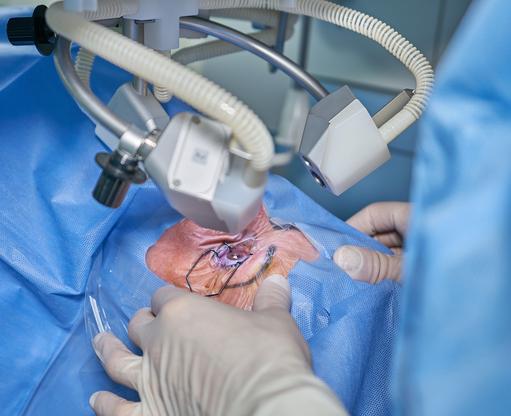
Cataract surgery, once only for elderly patients, is now increasingly being performed on younger baby boomers.
Facts More than half of the over-65s suffer from cataracts, which are cloudy patches in the lens that make vision blurred or misty. The condition is linked to smoking, poor diet or health conditions such as diabetes. Cataracts can affect your ability to read, write, watch TV, work at a computer, and drive. Severe cases can affect your ability to wash, dress, cook and work. According to the World Health Organization (WHO), 285 million people worldwide are visually impaired, 90% of these live in developing countries where cataracts are the leading cause of blindness. |
|
|
|
|
|

Sanjay Rao
Paediatric SurgeonDirectory:
Expertise:
Dr. Sanjay Rao is a Pediatric Surgeon from Bangalore working at Narayana Hrudayalaya Hospital, Bangalore.
He pursued his MBBS from Jawaharlal Nehru Medical College, Belgaum. He is highly qualified, with an MS in General Surgery, DNB in General Surgery, M.Ch in Pediatric Surgery and DNB in Pediatric Surgery.
Dr. Sanjay Rao has won many accolades for being the topper in various medical examinations. He has also won the Late Shri MC Valayutham prize for Anatomy, an award for Pharmacology, Community Medicine and so on.
As a dedicated medical practitioner, Dr. Sanjay has had a wide range of experience working in General Surgery as well as Pediatric Surgery. He has held many prestigious posts and has worked as the house officer in LTMG Hospital, Bombay, Registrar in MW Desai Hospital, Mumbai, Lecturer at LTMG Hospital, Specialist Registrar at Glasgow, UK etc.
Dr. Sanjay is also a member of many associations like the Association of Surgeons in India, National Academy of Medical Sciences, and British Association of Pediatric Surgeons. He has several research papers and publications to his credit.
Dr. Sanjay is also a keen participant in seminars and conferences conducted around the world. He has attended many workshops on Perinatology and Pediatric Surgeries, and his scientific papers has also been well received. Apart from this, he has also contributed his ideas in various medical books.
view this profile

Ramesh Tripathi
Senior Consultant Vascular & Endovascular SurgeonDirectory:
Expertise:
Prof. Ramesh Tripathi is currently the Clinical Director of Narayana Institute of Vascular Sciences at Narayana Hrudayalaya Health City, Bangalore, India.
His experience as a Consultant Vascular Surgeon spans over 19 years during which he has performed in excess of 9000 Vascular, 7000 endovascular procedures and 1400 Endovenous Laser treatments of varicose veins.
He has trained, worked, collaborated and tutored at leading Universities and hospitals internationally including USA, UK, Germany, India, Australia and New Zealand. He is credited for performing India’s first Endovascular repair of Abdominal Aortic Aneurysm in 1997 followed by India’s first Thoracic Aortic Aneurysm repair in 1998.
He also performed the first Implant of Medtronic Xcelerant AAA stent graft in Australia and New Zealand at Wellington Hospital, New Zealand on June 2005. He has since then performed over 900 Endovascular and hybrid repairs of Thoracic and Abdominal Aortic Aneurysms.
He is the first Vascular Surgeon from India to be honored as a Distinguished Fellow of Society of Vascular Surgery. He is an internationally renowned leading opinion maker in Vascular and Endovascular Surgery, who has made significant pioneering contributions to innovative, minimally invasive and new advances in Endovascular Surgery especially in the areas of Treatment of Thoracic and Abdominal Aortic Aneurysms for his innovative experimental work on in-situ fenestration of thoracic stent-grafts and Deep Venous Valve Surgery.
He is a Faculty and Speaker at many international Vascular Conferences for numerous years including VEITH Symposium, Charing Cross Symposium, European Vascular Course, ISET, American Venous Forum, Aristotle Vascular Experts’ Meeting, Australian and New Zealand Society of Vascular Surgery, Asian Society of Vascular Surgery, Sicilian Vascular Symposium, Aorta Italy, CICE Brazil, International Congress of Endovascular Interventions Arizona, New Zealand Society of Vascular Surgery and Vascular Society of India.
In India, his research interests revolve around endovascular treatments and genetics of Aortic Aneurysms, bioabsorbable Polymer stents and biology of leg ulceration. He is the Editor in Chief of Indian Journal of Vascular Surgery and a member of the editorial boards of Phlebology, Vascular Disease Management, AORTA and Venous Forum of American College of Phlebology. He reviews publications for 9 Journals.
view this profile

Balakrishna Naik
Senior Consultant, Obstetrician and GynecologistDirectory:
Expertise:
Dr. Balakrishna Naik , MBBS, MD, D.G.O,Senior Consultant,Obstetrician and Gynecologist at NH Multispecialty Hospital, Bangalore,India.
view this profile

Saurabh Bhargava
HOD & Consultant in UrologyDirectory:
Expertise:
Dr Saurabh Bhargava is a Consultant and Head of the Urology Department at Narayana Hrudayalaya in Bangalore, India.
view this profile

Lloyd Vincent
Senior Consultant Nephrologist and Clinical Director of the Dialysis ServicesDirectory:
Expertise:
Dr Lloyd Vincent is a Senior Consultant Nephrologist and Clinical Director of the Dialysis services at the Narayana Hrudayalaya Hospitals and Satellite centres, Bangalore, India.
He was formerly Associate Professor and Head of Nephrology at St John\'s Medical College, Bangalore, India.
In 1999, Dr Vincent was awarded the International Society of Nephrology Fellowship, to train in cadaver kidney transplantation at the University of Maryland, Baltimore, USA. He got a Masters Degree in Medical Informatics from The Erasmus University Rotterdam, Netherlands in 2001.
Dr.Vincent completed a clinical nephrology fellowship from the University of Toronto, Canada in 2006, during which period he received the “Marc Goldstein Clinician of the year award - 2005”. In 2007, he completed a renal transplant fellowship from the Multiorgan Transplant Unit, University of Toronto, Canada and was awarded the fellowship of the American Society of Transplantation.
His keen interest in nephrology and renal transplantation, informatics in healthcare, healthcare quality and the use of evidence in healthcare management led to the completion of a Masters Degree in Healthcare Administration from the University of Toronto in 2009. He is currently an accredited Canadian Healthcare Executive and awarded the CHE degree. In addition, in India he is also currently involved with the National Accreditation Board for Hospitals and Healthcare Providers (NABH), a constituent board of Quality Council of India as an assessor.
His major interests and research publications have focused on renal transplantation, the various levels of prevention of diabetic renal disease, disease management in chronic care, use of quality in healthcare and also the use of information technology such as point of care devices for remote medical monitoring.
view this profile

Anthony Pais
Senior Consultant Surgical OncologyDirectory:
Expertise:
Dr. Anthony Vijay Pais, Breast Surgeon, Professor & Senior Consultant in Surgical Oncology is the Head of the Breast Unit and Women's oncology at the Mazumdar Shaw Cancer Center and the Narayana Hrudayalaya Multi Speciality Hospital, Bangalore, India.
Being in the field of surgical oncology for 23 years he felt the need to develop a separate speciality for breast cancer and associated diseases. He also had special training to start a 'Breast Centre of Excellence' at the John Hopkins Avon Breast Centre, Baltimore, USA.
He has conducted several cancer detection camps for the underprivileged people and Bruhat Bangalore Mahanagara Palike workers, throughout Karnataka.
Under his guidance and direction, maximum number of breast cancer resections with immediate micro vascular reconstructions have been conducted in India (state of the art surgery done in the US), for the poorest of the poor.
He has published over 14 papers, and has 16 presentations to his credit. He has delivered 44 lectures at various hospitals and health centres.
Dr.Pais has gone through special training in Breast Ultrasound and Interpreting Mammograms in Japan and the USA. He has also got a certificate of competence to assess mammograms from the world renowned Radiologist Prof. Laszlo Tabar, Prof of Radiology, University of Uppsala School of Medicine, Sweden
view this profile

Vikram Kekatpure
Consultant Head and Neck SurgeonDirectory:
Expertise:
Dr. Vikram D. Kekatpure, MS, MCh, Consultant Head and Neck Surgeon trained at Amrita Institute of Medical Sciences, Kochi. He has done his fellowship at Memorial Sloan-Kettering cancer center, which is the premier cancer center in the world and Weill Medical College of Cornell University, New York, USA. He has served as faculty at the Amrita Institute of Medical Sciences, Kochi. He is visiting fellow at Weill Medical College of Cornell University, New York, USA.
Dr Kekatpure has a keen interest in academic activities and research and has several publications in peer reviewed journals to his credit.
He has strong interests in translational research, with emphasis on early detection and prevention of cancer. His research is directed towards biomarker based risk stratification and development of personalized cancer therapies. This risk stratification helps personalize cancer treatment for improved survival and reduce treatment associated side effects.
view this profile