

Dashboard
- All
-
Following
You must log in
before getting
tailored content. -
Interests
You must log in
before getting
tailored content. - Most liked
- Most viewed
E-Commentary
Sponsored

 12 years, 1 month ago


 Facebook
 Twitter
 Google+
 LinkedIn


Raina Zarb Adami
Aesthetic SurgeonDirectory:
Expertise:
After qualifying as a doctor from the University of Malta in 2004 and completing her housemanship on the island, Dr. Raina Zarb Adami then moved to Sydney, where she gained post-graduate experience in general and plastic surgery. She became a member of the Royal College of Surgeons of Edinburgh in 2008.
Dr. Zarb Adami’s approach to non-invasive facial rejuvenation and sculpting is unrivalled. She brings passion for quality to a cosmetic practice where integrity, intelligence and striving for perfection flourish. Her artistic eye complements a thorough scientific and surgical expertise.
She is an advanced practitioner based in London with an integrated approach using Botox (Botulinum Toxin), dermal fillers for treatments like lip enhancement and non-surgical rhinoplasty, skin care, chemical peels and Dermaroller microneedling techniques for facial rejuvenation and enhancement.
Her background in plastic surgery allows Dr. Zarb Adami to provide mole removal, scar treatment and split earlobe repair, offering optimal cosmetic outcomes.
Dr. Zarb Adami continues to attend and present at numerous conferences and workshops in aesthetic medicine and plastic surgery, both nationally and internationally. She has been awarded The Professions Woman of the Future in The Woman of the Future Awards 2010 and the Rising Star Award at the Aesthetic Awards UK 2011-2012.
She has successfully trained many practitioners in cosmetic procedures, and is a certified lecturer on the subject through The Academy of Aesthetic Excellence based in London. Dr Zarb Adami has dedicated time to volunteering with an Australian plastic surgery team operating on victims of burn injuries in Nepal. She also regularly participates in various other international voluntary work projects.
She is currently undertaking a research project as a PhD with the charity organisation RAFT (Restoration of Appearance and Function Trust) to develop an artificial skin – the Smart Matrix – to treat patients suffering from burns and other chronic and complex wounds.
view this profile

Niroshan Sivathasan
Cosmetic SurgeonDirectory:
Expertise:
Niroshan Sivathasan completed his bachelor’s and medical degrees at the age of 23 from King’s College London and University College London, respectively.
His postgraduate qualifications in surgery and aesthetic medicine were also gained in London. He has published over 30 articles, and is a reviewer and editorial committee-member for various medical journals.
He has a particular interest in cosmesis, and is undertaking an international fellowship in cosmetic surgery.
view this profile

Directory:
Tags:
|
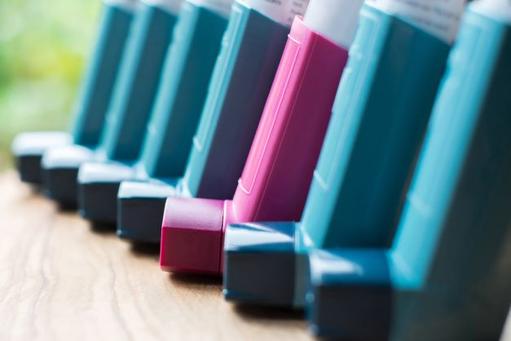
Public smoking bans and eating fibre significantly reduces people attending hospitals for asthma. These are the conclusions of two 2014 studies: one reported in the Lancet and the other in Nature Medicine.
Asthma Asthma is the inflammation of the air passages in the lungs. It occurs when the immune system mistakes harmless triggers, such as dust mites as threats, which cause the airways to become inflamed, leading to symptoms such as wheezing and breathlessness. Worldwide the economic costs associated with asthma exceed that of TB and HIV/AIDS together. |
|
|
|
|
|