Dashboard

E-Commentary


Sponsored
  • Chinese scientists lead the world in editing genomes of human embryos in order to develop new therapies for intractable diseases
  • US and UK regulators have given permission to edit the genes of human embryos
  • CRISPR-Cas9 has become the most common gene editing platform, which acts like is a pair of molecular scissors
  • CRISPR technology has the potential to revolutionize medicine, but critics say it could create a two-tiered society with elite citizens, and an underclass and have called for a worldwide moratorium on gene editing
  • Roger Kornberg, professor of medicine at Stanford University and 2006 Nobel Prize winner for Chemistry explains the science, which underpins gene-editing technology
  
Gene editing positioned to revolutionise medicine
 
It is a world first for China.
 
In 2015, a group of Chinese scientists edited the genomes of human embryos in an attempt to modify the gene responsible for β-thalassemia, a potentially fatal blood disorder. Researchers, led by Junjiu Huang from Sun Yat-sen University in Guangzhou, published their findings in the journal Protein & Cell.
 
In April 2016, another team of Chinese scientists reported a second experiment, which used the same gene editing procedure to alter a gene associated with resistance to the HIV virus. The research, led by Yong Fan, from Guangzhou Medical University, was published in the Journal of Assisted Reproduction and Genetics. At least two other groups in China are pursuing gene-editing research in human embryos, and thousands of scientists throughout the world are increasingly using a gene-editing technique called CRISPR-Cas9.


CRISPR-Cas9

Almost all cells in any living organism contain DNA, a type of molecule, which is passed on from one generation to the next. The genome is the entire sequence of DNA or an organism. Gene editing is the deliberate alteration of a selected DNA sequence in a living cell. CRISPR-Cas9 is a cheap and powerful technology that makes it possible to precisely “cut and paste” DNA, and has become the most common tool to create genetically modified organisms. Using CRISPR-Cas9, scientists can target specific sections of DNA, delete them, and if necessary, insert new genetic sequences. In its most basic form, CRISPR-Cas9 consists of a small piece of RNA, a genetic molecule closely related to DNA, and an enzyme protein called Cas9. The CRISPR component is the programmable molecular machinery that aligns the gene-editing tool at exactly the correct position on the DNA molecule. Then Cas9, a bacterial enzyme, cuts through the strands of DNA like a pair of molecular scissors. Gene editing differs from gene therapy, which is the introduction of normal genes into cells in place of missing or defective ones in order to correct genetic disorders.
 
Ground-breaking discovery 

The ground-breaking discovery of how CRISPR-Cas9 could be used in genome editing was first described by Jennifer Doudna, Professor of Chemistry and Cell Biology at the University of California, Berkeley, and Emmanuelle Charpentier, a geneticist and microbiologist, now at the Max Plank Institute for Infections in Berlin, and published in the journal Science in 2012.

In 2011 Feng Zhang, a bioengineer at the Broad Institute, MIT and Harvard, learned about CRISPR and began to work adapting CRISPR for use in human cells. His findings were published in 2013, and demonstrated how CRISPR-Cas9 can be used to edit the human genome in living cells.  

Subsequently, there has been a battle, which is on-going, between the scientists and their respective institution over the actual discovery of CRISPR’s use in human embryos, and who is entitled to the technology’s patents.
 
Gene editing research gathers pace worldwide: a few western examples

In 2016 a US federal biosafety and ethics panel licensed scientists at the University of Pennsylvania’s new Parker Institute of Cancer Immunotherapy to undertake the first human study to endow T-cells with the ability to attack specific cancers. Patients in the study will become the first people in the world to be treated with T-cells that have been genetically modified.

T-cells are designed to fight disease, but puzzlingly they are almost useless at fighting cancer. Carl June, the Parker Institute’s director and his team of researchers, will alter three genes in the T-cells of 18 cancer patients, essentially transforming the cells into super fighters. The patients will then be re-infused with the cancer-fighting T-cells to see if they will seek and destroy cancerous tumors.

Also in 2016, the UK’s Human Fertilisation and Embryology Authority (HFEA), which regulates fertility clinics and research, granted permission to a team of scientists led by Kathy Niakan at the Francis Crick Institute in London to edit the genes of human IVF embryos in order to investigate the causes of miscarriage. Out of every 100 fertilized eggs, fewer than 50 reach the early blastocyst stage, 25 implant into the womb, and only 13 develop beyond three months.
 
Frederick Lander, a development biologist at the Karolinska Institute Stockholm, is also using gene editing in an endeavour to discover new ways to treat infertility and prevent miscarriages. Lander is the first researcher to modify the DNA of healthy human embryos in order to learn more about how the genes regulate early embryonic development. Lander, like other scientists using gene-editing techniques on human embryos, is meticulous in not allowing them to result in a live birth. Lander only studies the modified embryos for the first seven days of their growth, and he never lets them develop past 14 days. “The potential benefits could be enormous”, he says.
 
Gene editing cures in a single treatment

Doctors at IVF clinics can already test embryos for genetic diseases, and pick the healthiest ones to implant into women. An advantage of gene editing is that potentially it could be used to correct genetic faults in embryos instead of picking those that happen to be healthy. This is why the two Chinese research papers represent a significant turning point. The gene editing technology they used has the potential to revolutionize the whole fight against devastating diseases, and to do many other things besides. The main benefit of gene editing therapy is that it provides potential cures for intractable diseases with a single treatment, rather than multiple treatments with possible side-effects.
 

The promise of gene editing for fatal and debilitating diseases
 
Among other things, gene editing holds out promise for people with fatal or debilitating inherited diseases. There are over 4,000 known inherited single gene conditions, affecting about 1% of births worldwide. These include the following:- cystic fibrosis, which each year affects about 70,000 people worldwide, 30,000 in the US, and about 10,000 in the UK; Tay-Sachs disease, which results in spasticity and death in childhood. The BRCA1 and BRCA2 inherited genes predispose women with a significantly greater chance of developing breast or ovarian cancer. Sickle-cell anaemia, in which inheriting the sickle cell gene from both parents causes the red blood cells to spontaneously “sickle” during a stress crisis; heart disease, of which many types are passed on genetically; haemophilia, a bleeding disorder caused by the absence of genetic clotting agent and. Huntington disease, a genetic condition which slowly kills victims by affecting cognitive functions and neurological status. Further, genomics play a significant role in mortality from chronic conditions such as cancer, diabetes and heart disease.
 
A world first

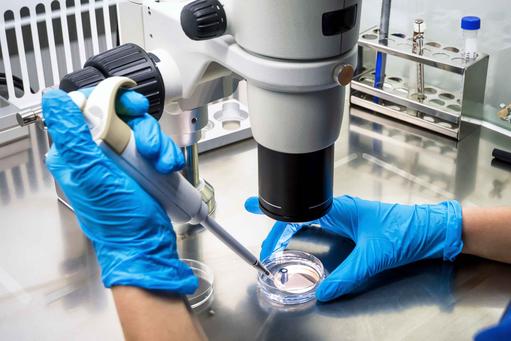
Huang and his colleagues set out to see if they could replace a gene in a single-cell fertilized human embryo. In principle, all cells produced as the embryo develops would then have the replaced gene. The embryos used by Huang were obtained from fertility clinics, but had an extra set of chromosomes, which prevented them from resulting in a live birth, though they did undergo the first stages of development. The technique used by Huang’s team involved injecting embryos with the enzyme complex CRISPR-Cas9, which, as described above, acts like is a pair of molecular scissors that can be designed to find and remove a specific strand of DNA inside a cell, and then replace it with a new piece of genetic material.
 
The science underpinning gene editing

In the two videos below Roger Kornberg, professor of medicine at Stanford University and 2006 Nobel Prize winner for Chemistry for his work on “transcription”, the process by which DNA is converted into RNA, explains the science, which underpins gene-editing technology:
 
How biological information, encoded in the genome, is accessed for all human activity


Impact of human genome determination on pharmaceuticals
 
An immature technology
 
Huang’s team injected 86 embryos, and then waited 48 hours; enough time for the CRISPR-Cas9 system, and the molecules that replace the missing DNA to act, and for the embryos to grow to about eight cells each. Of the 71 embryos that survived, 54 were genetically tested. Only 28 were successfully spliced, and only a fraction of those contained the replacement genetic material.
 
Therapy to cure HIV
 
Fan, the Chinese scientist who used CRISPR in an endeavor to discover a therapy for HIV/Aids, collected 213 fertilized human eggs, donated by 87 patients, which like embryos used by Huang, were unsuitable for implantation, as part of in vitro fertility therapy. Fan used CRISPR–Cas9 to introduce into some of the embryos a mutation that cripples an immune-cell gene called CCR5. Some humans who naturally carry this mutation are resistant to HIV, because the mutation alters the CCR5 protein in a way that prevents the virus from entering the T-cells it tries to infect. Fan’s analysis showed that only 4 of the 26 human embryos targeted were successfully modified.
 
Deleting and altering genes not targeted
 
In 2012, soon after scientists reported that CRISPR could edit DNA, experts raised concerns about “off-target effects,” where CRISPR inadvertently deletes or alters genes not targeted by the scientists. This can happen because one molecule in CRISPR acts like a bloodhound, and sniffs around the genome until it finds a match to its own specific sequence. Unfortunately, the human genome has billions of potential matches, which raises the possibility that the procedure might result in more than one match. 
 
Huang is considering ways to decrease the number of “off-target” mutations by tweaking the enzymes to guide them more precisely to a desired spot, introducing the enzymes in a different format in order to try to regulate their lifespans, allowing enzymes to be shut down before mutations accumulate; and varying the concentrations of the introduced enzymes and repair molecules. He is also, considering using other gene-editing techniques, such as LATENT.

 
The slippery slope to eugenics

Despite the potential therapeutic benefits from gene editing, critics suggest that genetic changes to embryos, known as germline modifications, are the start of a “slippery slope” that could eventually lead to the creation of a two-tiered society, with elite citizens, genetically engineered to be smarter, healthier and to live longer, and an underclass of biologically run-of-the-mill humans.
 
Some people believe that the work of Huang, Fan and others crosses a significant ethical line: because germline modifications are heritable, they therefore could have an unpredictable effect on future generations. Few people would argue against using CRISPR to treat terminal cancer patients, but what about treating chronic diseases or disabilities? If cystic fibrosis can be corrected with CRISPR, should obesity, which is associated with many life-threatening conditions? Who decides where the line is drawn?
 
40 countries have banned CRISPR in human embryos. Two prominent journals, Nature and Science, rejected Huang’s 2012 research paper on ethical grounds, and subsequently, Nature published a note calling for a global moratorium on the genetic modification of human embryos, suggesting that there are “grave concerns” about the ethics and safety of the technology.
 
A 2016 report from the Nuffield Council on Bioethics suggests that because of the steep rise in genetic technology, and the general availability of cheap, simple-to-use gene-editing kits, which make it relatively straightforward for enthusiasts outside laboratories to perform experiments, there needs to be internationally agreed ethical codes before the technology develops further.
 
Recently, the novelist Kazuo Ishiguro, among others, joined the debate, arguing that social changes unleashed by gene editing technologies could undermine core human values. “We’re coming close to the point where we can, objectively in some sense, create people who are superior to others,” says Ishiguro.
 
Takeaways

CRISPR has been described as the “Model T of genetics”.  Just as the Model T was the first motor vehicle to be successfully mass-produced, and made driving cheap and accessible to the masses, so CRISPR has made a complex process to alter any piece of DNA in any species easy, cheap and reliable, and accessible to scientists throughout the world. Although CRISPR still faces some technical challenges, and notwithstanding that it has ignited significant protests on ethical grounds, there is now a global race to push the boundaries of its capabilities well beyond its present limits.
 
view in full page
 
  • Influenza, or flu, outbreaks are recurrent and every year pose  a significant risk to global health
  • Influenza affects millions: each year 3m to 5m cases of severe disease and 500,000 deaths
  • Pandemics occur about three times a century
  • The 1918 flu pandemic killed 21m . . . Total deaths in World War I was 17m
  • Effective treatment of patients with respiratory illness depend on accurate and timely diagnosis
  • Early diagnosis of influenza can reduce the inappropriate use of antibiotics and provide the option of using antiviral therapy
  • Rapid Influenza Diagnostic Tests (RIDTs) are useful in determining whether outbreaks of respiratory disease might be due to influenza
  • RIDTs vary in their sensitivity, specificity, complexity, and time to produce results
  • There is a pressing need for faster, cheaper, and easier-to-use flu tests with higher levels of sensitivity and specificity than those currently available
  • The large, fast-growing, global and under-served RIDT market drives a host of initiatives
  • Various development challenges pose significant threats
 
 
The critical importance of new rapid influenza diagnostic tests
 
What challenges face developers of cheap, easy-to-use, rapid and accurate diagnostic tests for influenza, or flu, which improve on tests currently available?

 
Influenza

Influenza is a highly contagious respiratory illness caused by a virus, and occurs in distinct outbreaks of varying extent every year. Its epidemiologic pattern reflects the changing nature of the antigenic properties of influenza viruses. The viruses subsequent spread depends upon multiple factors, including transmissibility and the susceptibility of the population. Influenza A viruses, in particular, have a remarkable ability to undergo periodic changes in the antigenic characteristics of their envelope glycoproteins; the hemagglutinin and the neuraminidase. Anyone can get influenza. It is usually spread by the coughs and sneezes of an infected person. You can also catch flu by touching an infected person (e.g. shaking hands). Adults are contagious one to two days before getting symptoms and up to seven days after becoming ill, which means that you can spread the influenza virus before you even know you are infected. Influenza presents as a sudden onset of high fever, myalgia, headache and severe malaise, cough (usually dry), sore throat, and runny nose. There are several treatment options, which aim to ease symptoms until the infection goes, and aims to prevent complications. Most healthy people recover within one to two weeks without requiring any medical treatment. However, influenza can cause severe illness or death especially in people at high risk such as the very young, the elderly, and people suffering from medical conditions such as lung diseases, diabetes, cancer, kidney or heart problems.
  
Costly killer

Influenza is a cruel, costly killer with a history of pandemics. It causes millions of upper respiratory tract infections every year as it spreads around the world in seasonal epidemics, and poses on-going risks to health. The most vulnerable are the young, the old and those with chronic medical conditions such as heart disease, respiratory problems and diabetes. Each year, on average 5% to 20% of populations in wealthy countries get influenza. In the US it causes more than 200,000 hospitalizations and 36,000 deaths annually, and each year costs the American economy between US$71 to US$167bn.
 
History of pandemics

The 1918-19 “Spanish Flu” pandemic caused 21m deaths, and was one of three 20th century influenza pandemics. At least four pandemics occurred in the 19th century, and the first pandemic of the 21st century was the 2009 “Swine Flu”. Its virulence and global human impact was less deadly than originally feared, but it still resulted in 18,449 laboratory confirmed deaths. If you account for people who died as a result of complications precipitated by the Swine Flu, the actual death toll is significantly higher. Mindful of the potential accelerated spread of a pandemic subtype of the influenza virus, the World Health Organization (WHO), and national governments continuously monitor influenza viruses. Assessment of pathogenicity and virulence is the key to taking appropriate healthcare actions in the event of an outbreak.

However, without widespread access to improved diagnostic tests, each year millions will not receive timely anti-viral medication, tens of thousands of influenza sufferers will develop complications, and thousands will die unnecessarily, as the growing interconnections and complexity of the world present an increasing challenge to influenza prevention and control.
 

The influenza viruses

Influenza is a single-stranded, helically shaped, RNA virus of the orthomyxovirus family. Influenza viruses are divided into two groups: A and B. Influenza A has two subtypes which are important for humans: A(H3N2) and A(H1N1). The former is currently associated with most deaths. Influenza viruses are defined by two different protein components, known as antigens, on the surface of the virus. They are haemagglutinin (H) and neuraminidase (N) components. Influenza viruses circulate in all parts of the world, and mutate at a low level, referred to as "genetic drift", which allows influenza to continuously evolve and escape from the pressures of population immunity. This means that each individual is always susceptible to infections with new strains of the virus. "Genetic shift" occurs when a strain of influenza A virus completely replaces one or more of its gene segments with the homologous segments from another influenza A strain, a process known as reassortment. If the new segments are from an animal influenza virus to which humans have had no exposure and no immunity, pandemics may ensue.
 
Gold standard diagnosis rarely used

The gold standard method for the detection of influenza viruses is rarely performed, as patients with suspected influenza are most likely to be seen by a primary care doctor with limited resources, and the gold standard test requires sophisticated laboratory infrastructure, and takes at least 48 hours. Even the faster Reverse Transcription-Polymerase Chain Reaction (RT-PCR) test, which is a relatively new type of molecular assay that uses isothermal amplification of viral cells, has a turnaround time of four to six hours. It is also expensive, and therefore not commonly used.

The slowness and expense of traditional influenza tests led to the development of an array of commercially available Rapid Influenza Diagnostic Tests (RIDTs), which screen for influenza viruses, and provide results within as little as 15 minutes after sample collection and processing. Such tests are largely immunoassays that can identify the presence of influenza A and B viral nucleoprotein antigens in respiratory specimens and display the results in a qualitative way (positive or negative). About 10 such tests have FDA approval and are available in the US. About 20 have been determined suitable for the European market. All are growing in their usage. However, the RIDTs vary in their sensitivity, specificity, complexity, and in the time needed to produce results.
  
Tests rule in Influenza but do not rule it out
 
According to the Centers for Disease Control and Prevention (CDC) the commercially available RIDTs in America have a sensitivity ranging from 50% to 70%. This means that in up to 50% of influenza cases, test results will still be negative. A study showed that tests for the N1H1 virus, a subtype of influenza A that was the most common cause of the Swine Flu in 2009, and is associated with the 1918 Spanish Flu pandemic, have a sensitivity ranging from 32% to 50% depending on the brand of test. A 2012 meta-analysis of the accuracy of RIDTs reported an average sensitivity for detecting influenza in adults of only 54%. Sensitivity in children is somewhat higher since they tend to shed a greater quantity of virus. Thus some 30% to 50% of flu samples that would register positive by the gold standard viral culture test may give a false negative when using a RIDT, and some may indicate a false positive when a person is not infected with influenza. Thus, RIDTs that are currently available allow Influenza to be ruled in but not ruled out. More sensitive tests are needed.
 
New flu tests

There are a number of innovative nano-scale molecular diagnostic influenza tests in development, which are expected to deliver more accurate validations than existing antigen-based molecular tests. The new tests use a platform, comprised of an extremely thin layer of material, which detects the presence of influenza proteins in saliva or blood. This is attached to an electronic chip, which transforms the platform into a sensor. This is an essential part of the measuring device as it converts the input signal to the quantity suitable for measurement and interpretation. The presence of influenza proteins in saliva or blood triggers an electrical signal in the chip, which is then communicated to a mobile phone.
 
Here Roger Kornberg, Professor of Medicine at Stanford University and 2006 Nobel Laureate for Chemistry describes how advances in molecular science are enabling the replacement of traditional in vitro diagnostics with rapid, virtually instantaneous point-of-care diagnostics without resort to complex processes or elaborate infrastructure.  Antiviral drugs for influenza are available in some countries and may reduce severe complications and deaths. Ideally they need to be administered early (within 48 hours of onset of symptoms) in the disease.  An almost instantaneous point-of-care test will enable better access to appropriate treatment particularly in primary care:


Challenges

Notwithstanding all the recent scientific advances, new and innovative influenza detection tests will need to overcome significant challenges to outperform current RIDTs. In addition to the usual challenges associated with sensitivity and specificity, new developers have to be aware of recent changes in immunochromatographic antigen detection testing for influenza viruses, and the rapid development of commercially available nucleic acid amplification tests. Also, there are the usual development challenges associated with miniaturization, fabrication, scaling, marketing, and regulation. Effective from 13 February 2017, the FDA reclassified antigen based rapid influenza detection tests from class I into class II devices. Class II devices are higher risk than Class I, and require greater regulatory controls to provide reasonable assurance of the device’s safety and effectiveness. This was provoked by the potential for the devices to fail to detect newer versions of the influenza virus. For instance, a novel variant of influenza A,H7N9, has emerged in Asia, and H5N1 is also re-emergent.
 
Another challenge, especially for start-ups with limited resources, is the fluctuating nature of the influenza virus itself. A bad year for patients, when influenza causes millions of people to become ill, is a good year for manufacturers of RIDTs. Conversely, a good year for patients, when influenza affects a lower percentage of the population, is a bad year for manufacturers who suffer from unsold inventory, and reduced revenues. Thus, the vagaries of the flu virus not only have the potential to kill millions of people, they also pose a significant threat to start-ups dedicated to developing RIDTs.
 
Takeaways

Despite all the challenges, there is a significant commercial opportunity in the current under-served global RIDT market for improved tests. Each year, in the US, more than 1bn people visit primary care doctors, and in the UK, the NHS, deals with over 1m patients every 36 hours. The global in vitro diagnostics market was valued at US$60bn in 2016. Between 2016 and 2021, the market is expected to grow at a CAGR of 5.5% to reach US$79bn by 2021. Over the same period, the global point-of-care diagnostics sub-market is expected to grow at a CAGR of 10% to reach US$37bn by 2021. Large corporates, small start-ups, and university research laboratories have spotted the opportunity, and started developing new and innovative RIDTs. Given that each-year influenza causes widespread morbidity as well as mortality, it should be a matter of priority to support all efforts to develop swift and reliable RIDTs. A significant step forward would be a RIDT with greater sensitivity and usability such that the test could be administered and a result given within a 10-minute primary care consultation.
 
view in full page
joined 8 years, 10 months ago

High Oaks Dental Practice

High Oaks Dental Practice
Directory:
Expertise:

High Oaks Dental welcomes your entire family to our St Albans Dental Practice. High Oaks Dental Practice is one of the best emergency dentistry offering 24-hour dental emergency in St Albans, Hertfordshire and nearby areas. Our team of Dentists in  St Albans brings you the expertise, incorporating technology to offer patients with an optimal dental care in a relaxing environment.
Find the right clinic for Invisible Braces in St Albans, compare prices, read reviews and see before after pictures. Do not hesitate to call us on 0172 789 3430 to book your first appointment.


view this profile
joined 8 years, 10 months ago

Simoen Sizer

The London Vaginal Atrophy Clinic

The London Vaginal Atrophy Clinic offers unique and ideal solution for an effective treatment of vaginal atrophy in London, as well as discomfort, dryness, laxity and painless intercourse treatments in London.

The London Vaginal Atrophy is a Dyspareunia treatment clinic in London providing effective Dyspareunia treatments, a sexual pain disorder felt in the genital area or pelvic.


view this profile