Dashboard

E-Commentary


Sponsored
  • Stem cell study aims to improve prospects for lung cancer sufferers
  • Professor Sikora suggests that lung cancer is associated with poverty
  • Current therapies for lung cancer extend life by only a few months
  • Lung cancer kills more people than any other cancer

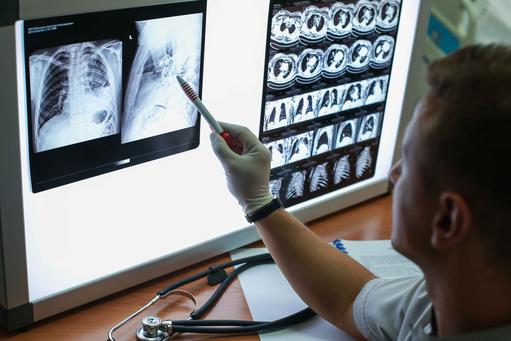
Lung cancer and cutting edge stem cell therapy

In 2015 a combined stem cell and gene therapy for lung cancer started its first clinical study in the UK. Professor Sam Janes of University College London, the study’s leader, said: “This will be the first UK cell therapy for lung cancer, and the biggest manufacturing of cells of its kind.” 

Dr Chris Watkins, director of translational research at the Medical Research Council, which is funding the study, said: “Lung cancer kills more men and women than any other cancer, and improving the outcome for patients with this terrible disease is one of the biggest challenges we face. This new therapy, which uses modified stem cells to target the tumour directly is truly at the cutting edge.”

 
Few studies
 
The use of stem cells for treating lung diseases has increasing appeal, but as yet, little is known about the effects of administering stem cell therapy to patients with lung diseases. Currently, there are only a small number of approved clinical studies in the US and Canada investigating cell therapy approaches for lung diseases. Patrick O’Brien a consultant obstetrician and gynaecologist at University College Hospital, London describes an initiative to create a national stem cell bank in the UK: 


Lung cancer
 
Lung cancer is the most common cancer worldwide, accounting for 1.8 million new cases and 1.6 million deaths in 2012. This year, an estimated 224,210 adults in the US, 40,000 in the UK, and 169,000 in India will be diagnosed with lung cancer, 90% of which are and caused by smoking. Of those diagnosed, 95% will die within ten years, although early stage lung cancer has a much better survival rate. Professor Karol Sikora, a world respected oncologist, and campaigner for better universal cancer treatment, suggests that lung cancer is associated with poverty:


Traditional therapies
 
Cell-gene therapy holds out new hope. “Lung cancer is very difficult to treat because the vast majority of patients are not diagnosed until the cancer has spread to other parts of the body. One therapy option for these patients is chemotherapy, but even if successful this treatment can normally only extend lives by a handful of months,” says JanesCurrent therapeutic strategies of chemotherapy, radiation therapy, and clinical studies with new-targeted therapies have only demonstrated, at best, extension in survival by a few months.
 
Innovative approach
 
“We aim to improve prospects for lung cancer patients by using a highly targeted therapy using stem cells, which have an innate tendency to home in on tumours when they’re injected into the body. Once there, they switch on a ‘kill’ pathway in the cancer cells, leaving healthy surrounding cells untouched,” says Janes. His study will test the treatment in human volunteers, firstly to check that the treatment is safe, and then in 56 lung cancer patients to see how effective the gene-cell therapy compares with standard care. Each patient in the study will receive three infusions comprised of billions of cells in parallel with chemotherapy.
 
Takeaways

A key advantage of Janes’ proposed treatment is that the cells do not have to be closely matched to a person’s tissue type or genetic profile. They are simply taken “off the shelf” from existing bone marrow supplies. This is because the cells have relatively few proteins on their surface, and do not induce an immune response in the recipient.
 
view in full page

 
  • Obesity is common, serious and costly
  • Obese adults in the UK will soar by a staggering 73% to 26m by 2030
  • Obesity generates an annual loss equivalent to 3% of the UK’s GDP
  • Obesity cost NHS England £8bn in 2015
  • The obesity epidemic will only get worse unless we take effective action
  • Innovative research to control appetite could provide a cheap and scalable answer to the obesity epidemic
  • The UK’s obesity crisis should learn from the way AIDS was tackled 

Can the obesity epidemic learn from the way Aids was tackled?
 
Obesity is a common chronic health challenge, which is serious and costly.It is one of the biggest risk factors for type-2 diabetes (T2DM) and together - obesity and T2DM - form a rapidly growing global diabesity epidemic, which today affects some 9m people in England.
 
Experts forecast the incidence rate of obesity will rise sharply, and bankrupt the NHS. Conventional strategies to reduce obesity and prevent T2DM have failed. According to the Mayo Clinic it is common to regain weight no matter what weight loss treatment methods you try, and you might even regain weight after weight-loss surgery. This Commentary suggests that extra resources are urgently needed to accelerate and broaden innovative obesity research.
  
Efforts to tackle obesity are low priority and fragmented
 
Overweight and obesity lead to adverse metabolic effects on blood pressure, cholesterol, triglycerides and insulin resistance. Risks of coronary heart disease, ischemic stroke, and T2DM increase steadily with raised body mass index (BMI). High BMI also increases the risk of osteoarthritis; sleep apnoea, gallbladder disease, and some cancers. Cancer Research UK predicts that obesity related cancers are expected to increase 45% in the next two decades, causing 700,000 new cases of cancer. Mortality rates will increase with increasing degrees of obesity. It is therefore important that obesity is treated aggressively. According to a 2014 McKinsey Global Institute study, the UK’s Government efforts to tackle obesity are ''too fragmented to be effective'', while investment in obesity prevention is ''relatively low given the scale of the problem''.
 
A multi-generational problem
 
The 2014 Health Survey found that 61.7% of adults in England (16 years or over) are either overweight or obese, and the prevalence of obesity among adults rose from 14.9% to 25.6% between 1993 and 2014. The number of obese adults in the UK is forecast to soar by a staggering 73% to 26m over the next 20 years.

In 2014-15, there were 440,288 hospital admissions in England due to obesity: 10 times higher than the 40,741 recorded in 2004-5. In England one in five children in their first year at school, and one in three in year 6 are obese or overweight. Also, in the past 10 years there has been a doubling of children admitted to hospital for obesity. Over the past three years 2,015 overweight youngsters needed hospital treatment, and 43 of these have had to undergo weight-loss surgery to reduce the size of their stomachs. Today, diabesity is a multi-generational problem, which suggests that far worse is still to come.
 
Costs and spends
 
The UK spends less than £638 million a year on obesity prevention programs - about 1% of the country's social cost of obesity. But the NHS spends about £8bn a year on the treatment costs of conditions related to being overweight or obese and a further £10bn on diabetes.
 
Obesity is a greater burden on the UK’s economy than armed violence, war and terrorism, costing the country nearly £47bn a year, the 2014 McKinsey study found. Obesity has the second-largest economic impact on the UK behind smoking, generating an annual loss equivalent to 3% of GDP. The current rate of obesity and overweight conditions suggest the cost to NHS England alone could increase from £8bn in 2015 to between £10bn and £12bn in 2020.

 
19th century technologies for a 21st pandemic
 
A year after the publication of the McKinsey study, the UK government launched a national Diabetes Prevention Program (DPP) led by NHS England, Public Health England (PHE), and the charity Diabetes UK (DUK). The program offers people at risk of T2DM an intensive personalised course in weight loss, physical activity and diet, comprising of 13 one-to-one, two-hour sessions, spread over nine months, and is expected to significantly reduce the estimated five million overweight and obese people in England, and thereby prevent them from developing T2DM. A previous Commentary predicted that the DPP would fail because it is using a 19th century labour intensive method to address a 21st epidemic.
 
This suggests that the diabesity epidemic will only get worse unless we take more urgent and effective action. A view supported by Majid Ezzati, Professor of Global Environmental Health at Imperial College, London, and the senior author of the most comprehensive review of obesity ever undertaken, and published in The Lancet in April 2016. According to Ezzati, “The epidemic of severe obesity is too extensive to be tackled with medications such as blood pressure lowering drugs or diabetes treatments alone, or with a few extra bike lanes”.

 
Radical action: weight loss surgery
 
The gravity of the UK’s obesity epidemic is demonstrated by the National Institute for Health and Care Excellence (Nice) 2016 suggestion to lower the threshold at which overweight people are offered weight loss surgery. The UK lags behind other European countries in this regard, and experts argue that lowering the threshold would mean the number of people who qualify for weight loss surgery would increase significantly.

According to a report prepared by English surgeons, weight-loss surgery would make people healthier and save the NHS money. The report concluded that after weight loss surgery obese people are 70% less likely to have a heart attack, those with T2DM are nine times more likely to see major improvements in their condition, and also the surgery has a positive effect on angina and sleep apnoea. If all the 1.4m most severely obese people in the UK had weight loss surgery, which costs the NHS around £6,000 per operation, the total cost would be £8.4bn.

 
Weight loss surgery and the brain
 
Initially it was thought that weight-loss surgery worked by reducing the amount of food that can be held by the stomach. However, some patients were found to have elevated levels of satiety hormones, the chemical signals released by the gut to control digestion and hunger cravings in the brain. Patients who had undergone surgery were also found to prefer less fatty foods, which supports the thesis that the hormones also change the patients’ desire to eat, and reinforce the gut brain relationship. This finding reinforces the important link between the gut and the brain on which some of the most promising obesity research is predicated.
 
Gut brain relationship
 
Dr Syed Sufyan Hussain, Darzi Fellow in Clinical Leadership, Specialist Registrar and Honorary Clinical Lecturer in Diabetes, Endocrinology and Metabolism at Imperial College London describes the gut-brain relationship and explains why we eat and why we stop eating:


Cheap, safe and scalable treatment for obesity
 
The person who has spent most of his professional life searching for cheap, safe and scalable alternatives to weight loss surgery and ineffective weight loss therapies is Professor Sir Steve Bloom, Head of Diabetes, Endocrinology and Metabolism at Imperial College London. Bloom believes that the answer to the UK’s obesity epidemic lies in the gut-brain relationship, and is working on two innovative methods of appetite control, which he and his colleagues believe could significantly reduce the burden of obesity.
 
Method 1: an implantable microchip
 
One method is comprised of a small implantable microchip attached to the vagus nerve to suppress appetite in a natural way. The chip reads and processes both electrical and chemical signatures of appetite within the vagus nerve, and then sends electrical signals to the brain to either reduce or stop eating. Bloom has proven the method’s concept, and in 2013 was awarded €7m from the European Research Council to continue his research. Early findings suggest that chemical rather than electrical impulses are more selective and precise, and the chip reduces both consumption and hunger pangs. All things being equal, it will take another 10 years before this treatment gets to market.
 
Method 2: naturally occurring hormones
 
Bloom is also working on another method to treat obesity, which uses naturally occurring hormones that reduce appetite. Early clinical studies suggest that people will consume 13% fewer calories when they eat a meal after taking the hormones. In 2013 Bloom received £2m from the Medical Research Council to develop this research. One of the significant challenges he faces is hormones normally last only a few minutes in the human body. To overcome this Bloom and his colleagues have had to develop versions of the hormones that can last up to a week before they start breaking down. This suggests that patients could take a single weekly injection to control their appetites. Another approach would be to develop a device, which delivers the hormones continuously. While promising, this method too will take 10 years to get to market.
 
Takeaway: treat obesity the same as Aids
 
Bloom believes that if we approached obesity as we did Aids, the time to develop a cheap, effective and scalable drug for weight control could be cut by half. "The obesity pandemic is the biggest disease that has hit mankind ever in terms  [of] numbers. It is killing more people than anything else has ever killed, . . . . . . . in terms of disease [there are] more deaths from obesity than anything we have known about. The time needed to develop an effective drug could be cut by more than half if conservative checks and balances were loosened. I think we might need to treat obesity in a hurry, and we are being held up. The Aids lobby forced Aids’ drugs on to the market before they had finished testing, but they turned out to be useful and lives were saved. Something similar should be considered for obesity,” says Bloom.
 
view in full page
joined 9 years, 6 months ago

Roger Kornberg

Winzer Professor in Medicine, Stanford University School of Medicine; Nobel Laureate 2006

Dr. Kornberg is an American biochemist and professor of structural biology at Stanford University School of Medicine. In 2006, Dr. Kornberg was awarded the 2006 Nobel Prize in Chemistry for his studies of the molecular basis of eukaryotic transcription. He determined how DNA’s genetic blueprint is read and used to direct the process for protein manufacture. Dr. Kornberg carried out a significant part of the research leading to this prize at the Stanford Synchrotron Radiation Laboratory (SSRL), a Department of Energy (DOE)-supported research facility located at the Stanford Linear Accelerator Center (SLAC).

Prior to joining the faculty at Stanford University School of Medicine, Dr. Kornberg was a postdoctoral research fellow at the Laboratory of Molecular Biology in Cambridge, England. In 1976 he became an Assistant Professor of Biological Chemistry at Harvard Medical School before moving to his current present position at Stanford Medical School in 1978.

Dr. Kornberg also carried out research at the Advanced Light Source, another DOE-funded synchrotron light source located at the Lawrence Berkeley National Laboratory. Dr. Kornberg was the first to create an actual picture of how transcription works at a molecular level in the important group of organisms called eukaryotes (organisms whose cells have a well-defined nucleus). Humans and other mammals are included in this group, as is ordinary yeast. For cells to produce working proteins—a process necessary for life—information stored in DNA must first be transcribed into a form readable by the cell’s internal machinery.

Dr. Kornberg has served as the Chairman of the Scientific Advisory Boards of many companies including Cocrystal Discovery, Inc, ChromaDex Corporation, StemRad, Ltd, Oplon Ltd, and Pacific Biosciences. He has also served as a Board Director for OphthaliX Inc., Protalix BioTherapeutics, Can-Fite BioPharma, Ltd, and Teva PharmaceuticalIndustries, Ltd.

Dr. Kornberg’s studies have provided an understanding at the atomic level of how the process of transcription occurs and also how it is controlled. Because the regulation of transcription underlies all aspects of cellular metabolism, Dr. Kornberg’s research also helps explain how the process sometimes goes awry, leading to birth defects, cancer, and other diseases.


view this profile
joined 9 years, 6 months ago

Josh Shachar

Chief Innovation Officer, Sensor-Kinesis Corporation

Josh Shachar has been involved in advanced technologies for the Department of Defense for over 20 years. Mr. Shachar has held many executive management positions at high-technology companies dealing directly with the United States Department of Defense.

Mr. Shachar began his professional career in 1981 at ThermoControl, Inc. in Chatsworth, California, as the founder and Vice President of Engineering. This company was acquired by Daily Instrument of Houston, Texas. In 1996, Mr. Shachar served as the Vice President of Engineering at Pastushin Aviation, Inc. In the following year, Mr. Shachar founded and served as the President of Lambda Signatics, Inc., which was later acquired by Shapco Industries.

Mr. Shachar is still the principal owner and founder of numerous high-technology companies including ThermoCouple America LLC, EDEL Engineering Development Corp., and Engineered Magnetics, Inc.

Mr. Shachar is an author of numerous U.S. Patent applications in medical, biometrics and diagnostic applications.


view this profile
joined 9 years, 6 months ago

Thomas Chen

Chief Neurosurgeon Officer, Sensor-Kinesis Corporation

Dr. Thomas Chen is a physician, a board certified neurosurgeon, and the Director of Surgical Neuro-oncology at USC. He is highly recognized for his skills as a neurosurgeon, and is also a tenured Professor of Neurosurgery and Pathology at USC.

Dr. Chen graduated summa cum laude in three years from the University of Illinois at Urbana-Champaign, where he also received Bronze Tablet honors (top 3% of undergraduate students) and was inducted into the Phi Beta Kappa national academic honor society. He then attended the University of California, San Francisco, where he was inducted into the Alpha Omega Alpha national medical honor society. Afterward, he underwent neurosurgery training at the University of Southern California (“USC”).

In order to prepare for his career in neuro-oncology, Dr. Chen also obtained a Ph.D. degree in pathobiology. His thesis was on the role of immunotherapy in malignant brain tumors. He is also a fellowship-trained spine surgeon and one of a few surgical neuro-oncologists in the country who specialize in spine cancer surgery.

Currently, Dr. Chen maintains a busy clinical practice in both surgical neuro-oncology and spine surgery. He heads a research laboratory focused on glioma biology.

Dr. Chen has published extensively on glioma biology and neurosurgery. He is on the editorial board for The Spine Journal and Journal of Neuro-oncology, and is on the review board for Neurosurgery and Journal of Neurosurgery. He is on numerous national neurosurgery committees.


view this profile