Directory

Cancer

Sponsored
 

Prostate cancer develops in the walnut-sized gland underneath the male bladder. It is the most common cancer, other than skin cancer and is the second leading cause of cancer-related death in men.
 
The disease, which often develops slowly, is different to most other cancers because small areas of cancer within the prostate are common, especially in older men and may not grow or cause any problems. This presents men diagnosed with prostate cancer with some extremely difficult choices.
 
The statistics
Prostate cancer is the second most frequently diagnosed cancer in men and the fifth most common cancer overall. One in six men will be diagnosed with the disease in their lifetime and the overwhelming majority of cases occur in wealthy countries.
 
Each year, about 37,000 men in the UK and some 210,000 men in the US are diagnosed with prostate cancer and more than 10,000 and 28,000 respectively die each year of the disease. In the US there are over two million men living with the disease and African American men have a higher incidence of prostate cancer and double the mortality rate compared with other racial and ethnic groups. In the US about US$10 billion is spent annually on treatments for the disease. 
 
Standard treatments
Traditional treatments to stop the spread of prostate cancer involve surgery and radiotherapy, which has significant side effects. Following such treatments 50% of patients experience impotence, up to 20% suffer incontinence and between one and five percent who receive radiotherapy experience pain and bleeding.  
 
The standard PSA test is imperfect 
In the UK there is currently no national screening programme for prostate cancer. However, in 2002 the Prostate Cancer Risk Management Programme was introduced in response to a demand for the prostate specific antigen (PSA) test among men worried about prostate cancer. The Programme provides information to men about the benefits and risks of the PSA test, which is available, free of charge, to men over 50.
 
PSA is a protein produced by normal cells in the prostate and also by prostate cancer cells. All men have a small amount of PSA in their blood and elevated PSA suggests prostate problems, but not necessarily prostate cancer.
 
The test is imperfect and is not good at detecting prostate cancer early. In some cases, it completely misses cancers while in others it reports cancer when it is not present. This can lead to some difficult choices for men.
 
A 2013 study in Radiation Oncology supports earlier findings and suggests that men over 70 are better avoiding the PSA test since men with high risk prostate cancer are more likely to die of causes other than the disease.
 
The imperfections in PSA testing led, in 2011, to the US changing its guidelines on prostate cancer screening to suggest that healthy men should not take the test because of the risk of over diagnosing. Despite efforts to improve the PSA test, it is still recognised as the best non invasive prostate cancer test available.
 
Some good news for sufferers  
A promising new therapy to treat prostate cancer is high-intensity focused ultrasound (HIFU). HIFU therapy is a treatment modality of ultrasound involving minimally invasive or non-invasive methods to accurately destroy tumours by effectively heating them while doing far less damage to surrounding tissue and avoiding significant side effects. 
 
A 2012 clinical study reported in The Lancet suggests that HIFU therapy offers prostate cancer patients a significantly better treatment option than traditional methods and can be completed in a matter of hours during an outpatient visit to a hospital.
 
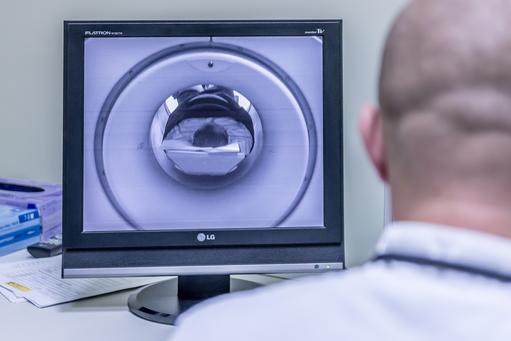
Clinical HIFU procedures are typically performed in conjunction with an imaging procedure to enable treatment planning and targeting before applying the therapeutic levels of ultrasound energy. MRI guided Focused Ultrasound Surgery (MRgFUS) combines a HIFU beam that non-invasively heats and destroys targeted tissue with MRI scanning that visualizes a patient’s anatomy and controls the treatment by continuously monitoring the tissue effect. 
 
Some other encouraging new therapies for prostate cancer
Recently, a new drug, enzalutamide (Xtandi), developed by the prestigious American prostate research centre in UCLA, has recently been licensed for use in the UK for patients with an advanced form of the disease and who have run out of treatment options.  
 
Also, there are some new FDA approved vaccines. One is sipuleucel-T (Provenge), which is designed to boost the body’s immune response to the prostate cancer cells. Another is PROSTVAC-VF, which uses a genetically modified virus containing PSA to trigger a response in a patient’s immune system to recognise and destroy cancer cells containing PSA.
 
Nutrition and Lifestyle
According to the World Health Organization, wealthy countries with the high meat and dairy consumption have the highest prostate cancer rates. This has encouraged scientists to examine foods and substances in them that may reduce the risk of prostate cancer.
 
Researchers suggest that lifestyle changes might affect the rate at which prostate cancer develops. One study reports that the level of PSA may be lowered by a vegan diet, regular exercise and yoga. Another suggests that a daily intake of flaxseed slows the rate at which prostate cancer cells multiply. Also, scientists suggest that lycopenes and isolflavones, found in tomatoes and soybeans respectively might help prevent prostate cancer.
 
Difficult choices for men
Given that patients decide about their treatment options and given that there are several treatment modalities for prostate cancer each with specific costs and risks; men diagnosed with prostate cancer face some difficult choices.
 
One challenge arises because genes linked to prostate cancer do not show which cancers are likely to remain within the prostate, which is normal for older men and which are more likely to grow and spread.
 
For example, researchers have found that the gene EZH2 is more frequent in advanced stages of prostate cancer, but this does not indicate how aggressive the cancer is. So, knowing of the genes presence does not help a patient make the important decision between immediate treatments or continued monitoring.
view in full page
 

  • Leading cancer scientist says we should abandon looking for a cancer cure
  • Another leading cancer scientist discovers key to killing all cancers
  • Cancer is an inevitable consequence of our multicellular make-up
  • Each person's cancer is unique
  • One in three people will develop cancer in their lifetime
  • Every day 1,500 Americans, and more non-Americans, die of cancer
Most cancers cannot be cured and scientists should devote their efforts to preventing and managing the disease instead of trying to find a cure. That’s the view of Melvyn Greaves Professor of Cell Biology at the Institute of Cancer Research, UK.


Game changing cure for all cancers

Greaves’ suggestion comes at a time when Professor Philip Ashton-Rickardt, from Imperial College London discovered a previously unknown protean, which boosts the body’s ability to fight off any cancer or virus. “This is a completely unknown protein. Nobody had ever seen it before or was even aware that it existed. It looks and acts like no other protein . . . . It could be a game-changer for treating a number of different cancers and viruses,” says Ashton-Rickardt.
 

Unanswered questions about cancer

Cancer is an uncontrolled cell proliferation, propelled by mutant genes that invade our tissues and hijack essential body functions.  Some regard this process as a ‘disease of the genome’. Around one in three of us will, at some time in our lives, be diagnosed with cancer; every day 1,500 Americans and vastly more non-Americans die of the disease. Missing from the narrative about cancer has been a coherent framework that makes sense of all its complexities and uncertainties: why are we so vulnerable to cancer, why is there so much diversity between different cancers, and even within single cancer types?  And why does treatment so often fail or only temporarily succeed?

Mike Birrer, Professor of Medicine, Harvard University Medical School and Director of Medical Oncology, Massachusetts General Hospital describes the Cancer Genome Atlas, a landmark cancer research program, which begins to address some of these questions: 


Previously undiscovered protein

The protein discovered by Ashton-Rickardt, named lymphocyte expansion molecule, or LEM, promotes the spread of cancer killing T cells by generating large amounts of energy. Normally when the immune system detects cancer it goes into overdrive trying to fight the disease, flooding the body with T cells. But it quickly runs out of steam.

The new protein discovered by Ashton-Rickardt causes a massive energy boost, which generates T cells in such great numbers that the cancer cannot fight them off. It also causes a boost of immune memory cells, which are able to recognise tumors and viruses they have encountered previously so there is less chance that they will return. Ashton-Rickardt, whose studies to-date have been in mice, is hoping to produce a gene therapy whereby T cells of cancer patients could be enhanced with the protein, and then injected back into the body. In three years he expects to begin human studies. If successful, Ashton-Rickardt’s discovery could end the need for chemotherapies, as the body itself would fight the disease, rather than toxic drugs.

Alex Walther, consultant medical oncologist and Director of Research in Oncology at University Hospitals, Bristol describes the challenges of clinical trails in personalised molecular medicine: 


Need for smarter cancer strategies

Although sceptical about a cancer cure, Greaves has spent years unravelling the causes of childhood leukaemia by examining the genetic influences and biological pathways that lead to the disease. In 2008, breakthrough research led by Greaves and Professor Tariq Enver, achieved a world-first by confirming the existence of stem cells responsible for childhood acute lymphoblastic leukaemia.

Greaves insists that, “We need to get smarter. Very intelligent people who aren't scientifically minded think there must be a cause, there must be a cure, and it’s just not right. It’s fundamentally wrong . . . Talking about a cure for cancer in terms of elimination is just not realistic. . . . There are a few cancers that are curable, but most are probably not, including the common carcinomas in adults . . . . We should therefore not try to eliminate the cancer, we should try to hold it in check,” says Greaves. 
 

Experts disagree

Leading cancer expert Professor Karol Sikora, is confident cancer cures could still be found, and finds Greaves’ pessimism, “Strange, given that Professor Greaves has done so much to help find a cure for leukaemia. I absolutely think we will find new cures in the future, and the closer we get to understanding the mechanism of the disease, the quicker this will happen.

Professor Peter Johnson, chief clinician at Cancer Research UK agrees with Sikora, “We already have cures for many types of cancer. For example, millions of people who have had breast cancer, prostate cancer or bowel cancer are alive years after their surgery to remove the tumour, if it was caught early enough.” 
 

Molecular Darwinism 

Cancer researchers throughout the world are attempting to find cures for individual cancers using increasingly advanced methods. These include ramping up the body's own immune system to fight the disease; personalized treatments based on the DNA of the tumors, and gene therapies. But Greaves believes no therapy will work in the long term because tumors continue to evolve like all life forms. "Isn't it odd that when you read reports about new cancer therapies they work dramatically, but three months later, cancer is back with a bang. It's almost always the story" says Greaves. 

In his book, Cancer: The Evolutionary Legacy, Greaves describes the Darwinian process by which cancer cells mutate, and diversify by natural selection within our tissue ecosystems. According to Greaves cancer is an inevitable consequence of our make-up as a multicellular reproductive animal. Since multicellular organisms have been around for 700 million years there has been a long time for cancer to evolve; and, without DNA mutation, we ourselves would not have evolved, and adapted into what we are. According to Greaves, "Cancer becomes a statistical inevitability of nature; a matter of chance and necessity." 
 

Takeaways

Evolutionary principles derived from ecology, and the study of human evolution can change the way we think about the big question in cancer research. Will this provide new avenues for more effective cancer control or a cure? 

 
view in full page
 
A new test, called ADNEX, reported in the British Medical Journal in October 2014 helps to identify different types and stages of ovarian cancer more accurately, which scientists claim will reduce the incidences of unnecessary surgeries. 
 
Accurate, simple and ready
The test, developed by an international team led by Imperial College London and KU Leuven, Belgium, is based on patient data, a simple blood test, and features that can be identified on an ultrasound scan. Doctors can use it simply by entering patient data into a smartphone app. It's highly accurate, and discriminates between benign and malignant tumours, and also identifies different types of malignant tumours.
 
Successful treatment depends on accurate diagnosis, and diagnosis of ovarian cancer can be challenging. According to Professor Tom Bourne, Department of Surgery and Cancer at Imperial College London, "The way we assess women with ovarian cysts for the presence of cancer and select treatment lacks accuracy. This new approach to classifying ovarian tumours can help doctors make the right management decisions, which will improve the outcome for women with cancer. It will also reduce the likelihood of women with all types of cysts having excessive or unnecessary treatment that may impact on their fertility.
 
Frequently misdiagnosed
The frequent misdiagnosis of ovarian cancer means that it often presents late when it has already metastasized. It's the most aggressive gynecological malady, with poor survival rates: only 40% survive beyond five years, and it can affect any woman.
 
The reason why early symptoms are difficult to detect is because inside the abdomen, the ovary has a lot of space to grow into before it starts to press onto other structures such as the uterus, bowel and bladder.
 
Early detection is key
All women should be on guard of the symptoms, which may be vague at first, and similar to other conditions, such as digestive disorders. The commonest symptoms are discomfort or pain in the lower abdomen or pelvis, and also there may be backache or a swelling felt.
 
There is a survival rate of up to 90% when ovarian cancer is caught early, compared with less than 30% if it is discovered in the later stages. 
 
Increasing incidence in younger women
Around 1 in 55 women will get ovarian cancer at some time in their life, and it is more common over the age of 40. Less than 1 in 20 ovary cancers occur in women younger than this. There are inherited factors involved in some cases, and research is underway to find out how best to screen women at increased risk of the disease. Since the mid-1970s, the incidence of ovarian cancer in women between 15 and 39 has increased by some 56%.
 
Takeaway
Currently, early detection, and rapid referral to a specialist gynaecological cancer unit is the key to transforming survival rates for ovarian cancer. Patients therefore have to rely on seeing a doctor, and being correctly diagnosed in time. 
 
view in full page