

Dashboard
- All
-
Following
You must log in
before getting
tailored content. -
Interests
You must log in
before getting
tailored content. - Most liked
- Most viewed
E-Commentary
Sponsored

 7 years, 10 months ago


 Facebook
 Twitter
 Google+
 LinkedIn

Directory:
Tags:

|
|
|
Directory:
Tags:
Oesophageal Cancer
Epidemiology
Carcinoma of the oesophagus is a common, aggressive tumour. Several histological types are seen, almost all of which are epithelial in origin. The vast majority of these tumours will be either squamous cell carcinoma (SCC) or adenocarcinoma (AC).
Over a period of two decades the incidence of SCC has remained relatively stable or declined (particularly associated with smoking and alcohol), whilst there has been a rapid rise in the amount of AC seen, particularly in Caucasian males. This has now overtaken SCC as the most common form of oesophageal tumour in some developed countries.
The majority of cases (80-85%) are diagnosed in less developed countries; most of these are SCC.
Incidence
Carcinoma of the oesophagus is the 8th most common cancer in the world. Annual incidence of 18.0 per 100,000 in men and 8.5 per 100,000 in women. The male:female ratio for the adenocarcinoma subgroup is 52:10.
An average of 42% of cases were diagnosed in people aged 75 years and over, with more than eight out of ten (83%) occurring in those aged 60 and over.
The incidence of oesophageal carcinoma varies considerably with geographical location, with high rates in China and Iran, where it has been directly linked to the preservation of food using nitrosamines. AC is seen more frequently in Caucasian populations, whereas SCC is more frequent in people of African descent.
Hazardous aspects
The use of tobacco and alcohol are strong risk factors for both SCC and AC and have a synergistic effect in this respect for SCC and additive effect for AC. Cigarette smoking is associated with a 10-fold increase in risk for SCC and a 2- to 3-fold increase in risk for AC.
The relative increase in risk caused by smoking remains high for AC, even after 30 years of giving up smoking, but reduces within 10 years for SCC.
Barrett’s oesophagus, which is a precursor of AC.
Chronic inflammation and stasis from any cause increase the risk of oesophageal SCC – eg, strictures due to caustic injury or achalasia.
Tylosis and Paterson-Brown-Kelly syndrome are also associated with an increased risk for SCC. Obesity has been linked with increased risk for AC but reduced risk for SCC. Obesity increases the risk of gastro-oesophageal reflux disease (GORD), in turn increasing the risk of Barrett’s oesophagus.
The relationship between obesity and the rise in AC has, however, been questioned. A review of the Connecticut Tumor Registry data between 1940-2007 showed that the increase in AC seen in the 1960s predated the rise in obesity by a decade. The authors of the review propounded that this may have been linked to a decrease in the incidence of Helicobacter pylori infection or environmental factors.
One Japanese study showed a link between oesophageal cancer and tooth loss.
A family history of hiatal hernia is a risk factor for oesophageal adenocarcinoma, and some people appear to have a genetic predisposition to developing types of gastro-oesophageal cancers.


Patient education
Breast cancer Surgeon in BangalorePatientEdu is an online health care service provider. We are providing an opportunity for the patients to fast and easy health service all over the world through our on line or Virtual hospital. Patients can get the solution to their health problems through posting the health queries, Email, video or phone and finally you can get direct face to face appointment with our expertise through registering in our site. http://www.patientedu.info. Our doctors have an 10 years of training and experience in the field of Laparoscopic, gastrointestinal & bariatric surgeon based from National Health Service (NHS) in the UK.
view this profile
Directory:
Tags:
- A new gene editing study is poised on the cusp of medical history because it holds out the prospect of providing a cure for hemophilia
- Hemophilia is a rare incurable life-threatening blood disorder
- People with hemophilia have little or no protein needed for normal blood clotting
- Severe forms of the disorder may result in spontaneous and excessive bleeding
- In recent history many people with hemophilia died before they reached adulthood because of the dearth of effective treatments
- A breakthrough therapy in the 1980s was contaminated with deadly viruses
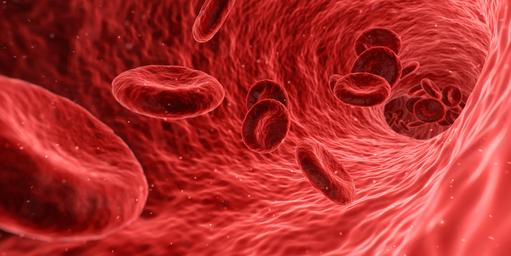
A study led by researchers from Barts Health NHS Trust and Queen Mary University London and published in a 2017 edition of the New England Journal of Medicine has made a significant step forward towards finding a cure for hemophilia A, a rare incurable life threatening-blood disorder, which is caused by the failure to produce certain proteins required for blood clotting. In recent history only a few people with hemophilia survived into adulthood. This was because of the dearth of effective treatments and any small cut or internal hemorrhaging after even a minor bruise was often fatal.
There are 2 main types of hemophilia: A and B. Both are rare congenital bleeding disorders sometimes referred to as “the royal disease,” because in the 19th and 20th centuries hemophilia affected European royal families. Queen Victoria of England is believed to have been a carrier of hemophilia B, a rarer condition than hemophilia A. 2 of Victoria’s 5 daughters (Alice and Beatrice) were also carriers. Through marriage they passed on the mutation to various royal houses across Europe including those of Germany, Russia and Spain. Victoria’s son Prince Leopold was diagnosed with hemophilia A when he was a child. He died at 31 and throughout his life had a constant staff of doctors around him.
The worldwide incidence of hemophilia A is about 1 in 5,000 males, with approximately 33% of affected individuals not having a family history of the disorder, which in their cases result from a new mutation or an acquired immunologic process. Only 25% of people with hemophilia receive adequate treatment; most of these are in developed nations. In 2016 there were some 7,700 people diagnosed with the condition in the UK, 2,000 of whom had a severe form with virtually no blood clotting protein. In the US there are some 20,000 people living with the disorder. Morbidity and death from hemophilia are primarily the result of haemorrhage, although HIV and hepatitis infections became prominent in patients who received therapies with contaminated blood products prior to the mid-1980s: see below.
|
|

The GP Clinic London
The GP Clinic LondonDirectory:
Expertise:
Welcome to the GP Clinic London. We aim to provide an exceptional healthcare experience. Using the latest evidence based medicine, state of the art modern facilities and a patient centred approach. We combine this with the core traditional values of general practice. Providing a caring and sensitive service and building long term trusting relationships with patients & families.
view this profile
Directory:
Tags:

- In high-income countries populations are aging
- By 2050 the world population of people over 60 is projected to reach 2bn
- Age-related low back pain is the highest contributor to disability in the world
- Over 80% of people will experience back pain at some point in their life
- Older people with back pain have a higher chance of dying prematurely
- The causes of back pain are difficult to determine which presents challenges for the diagnosis and management of the condition
- The US $100bn-a-year American back pain industry is “ineffective”
- Each year 10,000 and 300,000 spine fusion surgeries are carried out in the UK and US respectively
- 20% of spinal fusion surgeries are undertaken without good evidence
- In 10 to 39% of spine surgery patients pain continues or worsens after surgeries
A triumph of 20th century medicine is that it has created the “age of the aged”. By 2050 the world population of people aged 60 and older is projected to be 2bn, up from 900m in 2015. Today, there are 125m people aged 80 and older and by 2050 there is expected to be 434m people in this age group worldwide. The average age of the UK population has reached 40. Some 22% will be over 65 by 2031, and this will exceed the percentage of the UK population under 25. 33% of people born today in the UK can expect to live to 100. However, this medical success is the source of rapidly increasing age-related disorders, which present significant challenges for the UK and other high-income nations. Low back pain (LBP) is the most common age-related pain disorder, and ranked as the highest contributor to disability in the world.
At some point back pain affects 84% of all adults in developed economies. Research published in 2017 in the journal Scoliosis Spinal Disorders suggests that LBP is the most common health problem among older adults that results in pain and disability. The over 65s are the second most common age group to seek medical advice for LBP, which represents a significant and increasing workload for health providers. Each year back pain costs the UK and US Exchequers respectively some £5bn and more than US635bn in medical treatment and lost productivity. LBP accounts for 11% of the total disability of the respective populations. This Commentary discusses therapies for LBP, and describes the changing management landscape for this vast and rapidly growing condition.
Ranjeev Bhangoo, a consultant neurosurgeon at Kings’ College Hospital Trust, London, and the London Neurosurgery Partnership describes the nature and role of intervertebral discs and how treatment options should be assessed.
“When a person presents with a problem in the lower back, which might manifest as leg or arm pain, you need to ask 3 questions: (i) is the history of the pain compatible with a particular disc causing the problem? (ii) Does an examination suggest that a particular disc is causing a problem? And (iii) does a scan show that the disc you thought was the problem is the problem? If all 3 answers align, then there maybe some good reason to consider treatment options. If the 3 answers are not aligned, be weary of a surgeon suggesting intervention because 90% of us will experience back pain at some point in our lives, and 90% of the population don’t need back surgery.”

Back pain affects approximately 700m people worldwide. A 2011 report by the US Institute of Medicine, estimates that 100m Americans are living with chronic back pain, which is more than the total affected by heart disease, cancer, and diabetes combined. This represents a vast market for therapies that include surgery and the prescription of opioids. Estimates of the prevalence of LBP vary significantly between studies. There is no convincing evidence that age affects the prevalence of back pain, and published data do not distinguish between LBP that persists for more than, or less than, a year. Each year LBP affects some 33% of UK adults, and around 20% of these - about 2.8m - will consult their GP. One year after a first episode of back pain, 62% of people still experience pain, and 16% of those initially unable to work are not working after 1 year. Typically in about 60% of cases pain and disability improve rapidly during the first month after onset.
|
|


Directory:
Tags:

- Everyone connected with healthcare supports interoperability saying it improves care, reduces medical errors and lowers costs
- But interoperability is a long way from reality and electronic patient records are only part of an answer
- Could Blockchain a technology disrupting financial systems resolve interoperability in healthcare?
- Blockchain is an open-source decentralized “accounting” platform that underpins crypto currencies
- Blockchain does not require any central data hubs, which in healthcare have been shown to be easily breached
- Blockchain technology creates a virtual digital ledger that could automatically record every interaction with patient data in a cryptographically verifiable manner
- Some experts believe that Blockchain could improve diagnosis, enhance personalised therapies, and prevent highly prevalent devastating and costly diseases
- Why aren’t healthcare leaders pursuing Blockchain with vigour?
Blockchain technology is disrupting financial systems by enhancing the reconciliation of global transactions and creating an immutable audit trail, which significantly enhances the ability to track information at lower costs, while protecting confidentiality. Could Blockchain do something similar for healthcare and resolve the challenges of interoperability by providing an inexpensive and enhanced means to immutably track, store, and protect a variety of patient data from multiple sources, while giving different levels of access to health professionals and the public?
You might not have heard of Blockchain, but probably you have heard of bitcoin; an intangible or crypto currency, which was created in 2008 when a programmer called Satoshi Nakamoto (a pseudonym) described bitcoin’s design in a paper posted to a cryptography e-mail list. Then in early 2009 Nakamoto released Blockchain: an open source, global decentralized accounting ledger, which underpins bitcoin by executing and immutably recording transactions without the need of a middleman. Instead of a centrally managed database, copies of the cryptographic balance book are spread across a network and automatically updated as transactions take place. Bitcoin gave rise to other crypto-currencies. Crypto currencies only exist as transactions and balances recorded on a public ledger in the cloud, and verified by a distributed group of computers.
A common misconception is that electronic patient records (EPR) resolve interoperability. They do not. EPRs were created to coordinate patient care inside healthcare settings by replacing paper records and filing cabinets. EPRs were not designed as open systems, which can easily collect, amalgamate and monitor a range of medical, genetic and personal information from multiple sources. To realize the full potential and promise of interoperability EPRs need to be easily accessible digitally, and in addition, have the capability to collect and manage remotely generated patient healthcare data as well as pharmacy and prescription information; family-health histories; genomic information and clinical-study data. To make this a reality existing data management conventions need to be significantly enhanced, and this is where Blockchain could help.
|
|


Neil McHugh
Consultant Rheumatologist, Royal National Hospital for Rheumatic Diseases (RNHRD), Bath, UK; Professor of Pharmacoepidemiology, University of Bath, UKDirectory:
Expertise:
Professor Neil McHugh graduated from Otago University Medical School, Dunedin, New Zealand, and completed physician training before specialising in the subspecialty of rheumatology. He has undertaken research fellowships at the Walter and Eliza Hall in Melbourne, Australia (1985), Yale University Medical School, USA (1990–1991), and the National Heart and Lung Institute, UK (2002–2004).
Professor McHugh has been a Consultant Rheumatologist at the RNHRD since 1991, and Professor of Pharmacoepidemiology at the University of Bath since 2013. His current interests include the serology of idiopathic inflammatory myositis, scleroderma, lupus and juvenile idiopathic arthritis. His laboratory group offers specialist autoimmune serology at the University of Bath, leads on a major European study of adult and juvenile idiopathic myositis, and has identified a number of novel diagnostic autoantibody biomarkers.
Professor McHugh also leads a programme of work related to psoriatic disease, including a National Institute for Health Research programme grant related to the early detection and optimisation of outcome measures in psoriatic arthritis. He has led on successive British Society for Rheumatology guidelines for biologics in psoriatic arthritis, and has been involved in National Institute for Health and Care Excellence and other international guidelines for psoriatic disease.
view this profile
Directory:
Tags:

- Chronic obstructive pulmonary disease (COPD) is a lung condition, which makes it hard to breathe, but is often preventable and treatable
- COPD affects some 210m people worldwide, its prevalence is increasing, and it costs billions in treatment and lost production
- By 2020 COPD is projected to be the 3rd leading cause of death worldwide
- Recently, scientific advances have benefitted COPD research
- But COPD researchers are challenged to provide compelling data in support of their studies
- COPD research would benefit from smart online communications strategies
- This could strengthen collaboration among globally dispersed scientists and people living with COPD, and expand the geographies from which COPD data are retrieved
COPD is an umbrella term used to describe common progressive lifetime diseases, which damage the lungs and airways, and make breathing difficult. Its prevalence is increasing especially in developing countries. It is the 4th leading cause of death worldwide and projected to be the 3rd by 2020. The causes of COPD are well known, but the nature of the condition is still not fully understood even though COPD therapies have improved significantly in recent years. The effects of COPD are persistent and progressive, but treatment can relieve symptoms, improve quality of life and reduce the risk of death. COPD impacts people differently, medications affect patients differently, and such differences make it challenging for doctors to identify patients who are at risk of a more rapidly progressing condition.
Although COPD is complex with different etiologies, pathogens and physiological effects, there are two main forms: (i) chronic bronchitis, which involves a long-term cough with mucus, and (ii) emphysema, which involves damage to the lungs over time. COPD also has significant extra-pulmonary effects, which include weight loss, nutritional abnormalities, skeletal muscle dysfunction, and it is also a major cause of psychological suffering. Further, COPD may promote heart failure because obstruction of the airways and damage to the lining of the lungs can result in abnormally low oxygen levels in the vessels inside the lungs. This creates excess strain on the right ventricle from pulmonary hypertension, which can result in heart failure.
In developed countries, the biggest risk factor for the development of COPD is cigarette smoking, whereas indoor pollutants are the major risk factor for the disease in developing nations. Not all smokers develop COPD and the reasons for disease susceptibility in these individuals have not been fully elucidated. Although the mechanisms underlying COPD remain poorly understood, the disease is associated with chronic inflammation, which is usually corticosteroid resistant, destruction of the airways, and lung parenchyma (functional tissue). There is no cure for COPD, but it is sometimes partially reversible with the administration of inhaled long-acting bronchodilators, and its progression can be slowed through smart maintenance therapy, in particular a cessation of smoking. People with stage 1 or 2 COPD lose at most a few years of life expectancy at age 65 compared with persons with no lung disease, in addition to any years lost due to smoking. Current smokers with stage 3 or 4 COPD lose about 6 years of life expectancy, in addition to the almost 4 years lost due to smoking.
The economic burden of COPD is vast and increasing, with attributed costs for hospitalizations, loss of productivity, and disability, in addition to medical care. In 2010, the condition’s annual cost in the US alone was estimated to be approximately US$50bn, which includes $20bn in indirect costs, and $30bn in direct health care expenditures. COPD treatment costs the UK more than £1.9bn each year. Over the past decade in the UK progress in tracking the disease has stagnated, and there is a wide variation in the quality of care.
The prevalence of COPD has increased dramatically due to a combination of aging populations, higher smoking prevalence, changing lifestyles and environmental pollution. In developed economies, COPD affects an estimated 8 to 10% of the adult population, 15 to 20% of the smoking population, and 50 to 80% of lung cancer patients with substantial smoking histories. For many years, COPD was considered to be a disease of developed nations, but its prevalence is increasing significantly in developing countries, where almost 90% of COPD deaths occur. Even though most of the research data on COPD comes from developed countries, accurate epidemiologic data on the condition are challenging and expensive to collect. There is a dearth of systematically collected COPD prevalence data from developing nations, and a paucity of COPD studies in Africa, SE Asia and the Eastern Mediterranean region. Most of the available prevalence estimates from low- to middle-income countries are not based on spirometry testing (the internationally accepted gold standard for the diagnosis of COPD, which measures lung capacity). Hence, the available COPD data from developing countries cannot be interpreted reliably in a global context, and more data from these regions are necessary to extend and support further studies.
|
|