

Publications
- All
-
Following
You must log in
before getting
tailored content. -
Interests
You must log in
before getting
tailored content. - Most liked
- Most viewed
Sponsored

 6 years, 6 months ago


 Facebook
 Twitter
 Google+
 LinkedIn
Directory:
Tags:

- AstraZeneca has turned traditional biopharma R&D on its head and is targeting early stage cancer
- This strategy benefits from some of AstraZeneca’s R&D endeavours
- But the strategy faces strong headwinds, which include significant technological and market challenges and substantial Competition from at least two unicorns
AstraZeneca’s strategy to target early cancer
Will José Baselga’s gamble pay off?
Baselga is AstraZeneca's new cancer research chief who has turned traditional biopharmaceutical drug development on its head by announcing AstraZeneca’s intention to target early- rather than late-stage cancer. “We need to spend our resources on those places where we can cure more people and that’s in early disease”, says Baselga, who knows that early detection can significantly improve patient survival rates and quality of life, as well as substantially reducing the cost and complexity of cancer treatment. Baselga also must know his strategy is high risk. Will it work?
Baselga is AstraZeneca's new cancer research chief who has turned traditional biopharmaceutical drug development on its head by announcing AstraZeneca’s intention to target early- rather than late-stage cancer. “We need to spend our resources on those places where we can cure more people and that’s in early disease”, says Baselga, who knows that early detection can significantly improve patient survival rates and quality of life, as well as substantially reducing the cost and complexity of cancer treatment. Baselga also must know his strategy is high risk. Will it work?
In this Commentary
In this Commentary we discuss the drivers and headwinds of AstraZeneca’s strategy to increase its R&D focus on early stage cancer. But first we briefly describe cancer, the UK’s situation with regard to the disease and explain why big pharma targets advanced cancers. Also, we provide a brief description of AstraZeneca’s recent history.
What is cancer?
Cancer occurs when a normal cell’s DNA changes and multiplies to form a mass of abnormal cells, which we refer to as a tumour. If not controlled and managed appropriately the tumour can spread and invade other tissues and organs. In the video below Whitfield Growdon, a surgical oncologist at the Massachusetts General Hospital in Boston US, and a Professor at the Harvard University Medical School explains.

The UK’s record of cancer treatment
In the UK cancer survival rates vary between types of the disease, ranging from 98% for testicular cancer to just 1% for pancreatic cancer. Although the UK’s cancer survival rates lag those of other European countries, the nation’s overall cancer survival rate is improving. Several cancers are showing significant increases in five-year survival, including breast (80% to 86%), prostate (82% to 89%), rectum (55% to 63%) and colon (52% to 60%). Many of the most commonly diagnosed cancers in the UK have ten-year survival of 50% or more. With regard to cancer spending, compared with most Western European countries, including France, Denmark, Austria and Ireland, the UK spends less on cancer per person, with Germany spending almost twice as much per head.
Why big pharma targets advanced cancers?
Most cancers are detected late when symptoms have manifested themselves, which renders treatment less effective and more costly. When cancer is caught early, as in some cases of breast and prostate cancer, tumours tend to be removed surgically or killed by chemoradiation therapy (CRT) and this, for many people, provides a “cure”, although in some cases the cancer returns.
Studies in developed economies suggest that treatment costs for early-diagnosed cancer patients are two to four times less expensive than treating those diagnosed with advanced-stage cancer. Notwithstanding, there are physical, psychological, socio-economic and technical challenges to accessing early cancer diagnosis and these conspire to delay cancer detection. Thus, big pharma companies have traditionally aimed their new cancer drugs at patients with advanced forms of the disease. This provides pharma companies access to patients who are willing to try unproven therapies, which significantly helps in their clinical studies. And further, big pharma is advantaged because regulators tend to support medicines that slow tumour growth and prolong life, albeit by a few months.
Studies in developed economies suggest that treatment costs for early-diagnosed cancer patients are two to four times less expensive than treating those diagnosed with advanced-stage cancer. Notwithstanding, there are physical, psychological, socio-economic and technical challenges to accessing early cancer diagnosis and these conspire to delay cancer detection. Thus, big pharma companies have traditionally aimed their new cancer drugs at patients with advanced forms of the disease. This provides pharma companies access to patients who are willing to try unproven therapies, which significantly helps in their clinical studies. And further, big pharma is advantaged because regulators tend to support medicines that slow tumour growth and prolong life, albeit by a few months.
Imfinzi: the only immunotherapy to demonstrate survival at three years
A good example of this is AstraZeneca’s immunotherapy drug called Imfinzi (durvalumab) used in unresectable stage-III non-small cell lung cancer (NSCLC), which has not spread outside the chest and has responded to initial chemoradiation therapy. Imfinzi works by binding to and blocking a protein called PD-L1, which acts to disguise cancer cells from your immune system. Imfinzi removes the disguise so that your immune system is better able to find and attack your cancer cells.
Findings presented at the June 2019 meeting of the American Society of Clinical Oncology (ASCO), build on a clinical study of Imfinzi reported in the September 2018 edition of The New England Journal of Medicine, and suggest that Imfinzi is the only immunotherapy to demonstrate survival at three years in unresectable stage-III NSCLC. AstraZeneca has begun a phase-3 clinical study of the PD-L1 inhibitor protein in stage II NSCLC patients.
Findings presented at the June 2019 meeting of the American Society of Clinical Oncology (ASCO), build on a clinical study of Imfinzi reported in the September 2018 edition of The New England Journal of Medicine, and suggest that Imfinzi is the only immunotherapy to demonstrate survival at three years in unresectable stage-III NSCLC. AstraZeneca has begun a phase-3 clinical study of the PD-L1 inhibitor protein in stage II NSCLC patients.
|

|

Directory:
Tags:
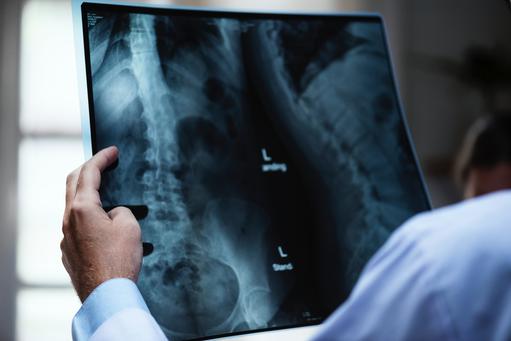
- People are living longer, the prevalence of age-related degenerative disc disease is increasing and sufferers are more and more turning to spinal implant surgery as a solution
- As this significantly raises the burden on over-stretched healthcare systems, so is spine surgery increasingly becoming a key target for cost reduction within healthcare systems
- This intensifies the pressure on manufacturers to innovate and make spinal implants more cost effective
Can 3D printing and the use of new alloys reduce the high costs of producing and marketing spinal implants?
On January 8th 2019 surgeons at Joseph Spine, a specialist surgery centre based in Tampa Bay Florida, were the first in the US to implant a 3D printed interbody fusion device, which was produced by Osseus Fusion Systems. The company uses its proprietary 3D printing technology, also known as additive manufacturing, to build spinal implants from titanium material that is optimized for bone fusion and biological fixation. In August 2018, a suite of Osseus’s devices received clearance from the US Food and Drug Administration (FDA) for a range of heights and lordotic (inward spinal curvature) angles, which make them adaptable for a variety of patient anatomies. The interbody fusion devices work by being packed with biomaterials and bone grafts and inserted in between two vertebrae, where they fuse with the spine and work to prevent back pain.
In this Commentary
This Commentary explores whether 3D printing and the use of new alloys could be an appropriate strategy to help spine companies reduce their production and sales costs and enhance their market positions. Our suggestions here complement a strategy, described in a previous Commentary, for MedTech companies to develop and implement digital strategies to enhance their go-to-market activities, strengthen the value propositions of products and services and streamline internal processes. The reasons spine companies might consider both strategies are because spinal implant markets, which are segmented by type of surgery, product and geography, are experiencing significant competitive, regulatory, pricing and technological challenges as well as mounting consumer pressure for improved outcomes; and the business model, which served as an accelerator of their financial success over the past decade is unlikely to be effective over the next decade.
3D printing
3D printing is a process, which creates a three-dimensional (3D) object by building successive layers of raw material. Each new layer is attached to the previous one until the object is complete. In the healthcare industry, 3D printing is used in a wide range of applications, such as producing dental crowns and bridges; developing prototypes; and manufacturing surgical guides and hearing aid devices. Increasingly, 3D printing is being used for the production of spinal implants.
Spine surgery increasing significantly
An estimated US$90bn is spent each year in the US on the diagnosis and management of low back pain (LBP). LBP, caused by age related degenerative disc disease, is one of the most common and widespread public health challenges facing the industrialized world. It is estimated that the condition affects over 80% of the global population and inflicts a heavy and escalating burden on healthcare systems. Also, LBP affects economies more generally in terms of lost production due to absenteeism, early retirement and the psychosocial impact caused by the withdrawal of otherwise active people from their daily activities. According to the American Association of Neurological Surgeons, more than 65m Americans suffer from LBP annually and the Chicago Institute of Neurosurgery and Neuroresearch suggests that by the age of fifty, 85% of the US population is likely to show evidence of disc degeneration. It is estimated that 10% of all cases of LBP will develop chronic back pain, which is one of the main reasons for people to seek surgical solutions and this significantly raises the burden on over-stretched healthcare systems.
Findings of a study published in the March 2019 edition of Spine, entitled, “Trends in Lumbar Fusion Procedure Rates and Associated Hospital Costs for Degenerative Spinal Diseases in the United States 2004 to 2015”, report that the rate of elective lumbar fusion surgeries in the US has increased substantially over the past decade. Such trends are indicative of most advanced industrial societies, which are changing and ageing, primarily driven by improvements in life expectancy and by a decrease in fertility. This results in people living longer, reaching older ages and having fewer children later in life. Over the next decade, these market drivers are expected to make spine surgery a key target for cost reduction within healthcare systems and this, in turn, is likely to increase pressure on manufacturers of spinal implants to make spine surgery more cost effective.
Findings of a study published in the March 2019 edition of Spine, entitled, “Trends in Lumbar Fusion Procedure Rates and Associated Hospital Costs for Degenerative Spinal Diseases in the United States 2004 to 2015”, report that the rate of elective lumbar fusion surgeries in the US has increased substantially over the past decade. Such trends are indicative of most advanced industrial societies, which are changing and ageing, primarily driven by improvements in life expectancy and by a decrease in fertility. This results in people living longer, reaching older ages and having fewer children later in life. Over the next decade, these market drivers are expected to make spine surgery a key target for cost reduction within healthcare systems and this, in turn, is likely to increase pressure on manufacturers of spinal implants to make spine surgery more cost effective.
|

|
|

|
Directory:
Tags:

- Two Boston Consulting Group studies say MedTech innovation productivity is in decline
- A history of strong growth and healthy margins render MedTechs slow to change their outdated business model
- The MedTech sector is rapidly shifting from production to solutions
- The dynamics of MedTechs' customer supply chain is changing significantly and MedTech manufacturers are no longer in control
- Consolidation among buyers - hospitals and group purchasing organisations (GPO) - adds downward pressure on prices
- Independent distributors have assumed marketing, customer support and education roles
- GPOs have raised their fees and are struggling to change their model based on aggregate volume
- Digitally savvy new entrants are reinventing how healthcare providers and suppliers work together
- Amazon’s B2B Health Services is positioned to disrupt MedTechs, GPOs and distributors
- MedTech manufacturers need to enhance their digitization strategies to remain relevant
MedTech must digitize to remain relevant
MedTech companies need to accelerate their digital strategies and integrate digital solutions into their principal business plans if they are to maintain and enhance their position in an increasingly solution orientated healthcare ecosystem. With growing focus on healthcare value and outcomes and continued cost pressures, MedTechs need to get the most from their current portfolios to drive profitability. An area where significant improvements might be made in the short term is in MedTechs' customer facing supply chains. To achieve this, manufacturing companies need to make digitization and advanced analytics a central plank of their strategies.
In this Commentary
This Commentary describes the necessity for MedTechs to enhance their digitization strategies, which are increasingly relevant, as MedTech companies shift from production to solution orientated entities. In a previous Commentary we argued that MedTechs history of strong growth and healthy margins make them slow to change and implement digital strategies. Here we suggest that the business model, which served to accelerate MedTechs' financial success over the past decade is becoming less effective and device manufacturers need not only to generate value from the sale of their product offerings, but also from data their devices produce so they can create high quality affordable healthcare solutions. This we argue will require MedTechs developing innovative strategies associated with significantly increasing their use of digital technology to enhance go-to-market activities, strengthen value propositions of products and services and streamline internal processes.
MedTechs operate with an outdated commercial model
Our discussion of digitization draws on two international benchmarking studies undertaken by the Boston Consulting Group (BCG). The first, published in July 2013 and entitled, “Fixing the MedTech Commercial Model: Still Deploying ‘Milkmen’ in a Megastore World” suggests that the high gross margins that MedTech companies enjoy, particularly in the US, hide unsustainable high costs and underdeveloped commercial skills. According to BCG the average MedTech company’s selling, general and administrative (SG&A) expenses - measured as a percentage of the cost of goods sold - is 3.5 times higher than the average comparable technology company. The study concludes that MedTechs' outdated business model, dubbed the “milkman”, will have to change for companies to survive.
BCG’s follow-up 2017 study
In 2017 BCG published a follow-up study entitled, “Moving Beyond the ‘Milkman’ Model in MedTech”, which surveyed some 6,000 employees and benchmarked financial and organizational data from 100 MedTech companies worldwide, including nine of the 10 largest companies in the sector. The study suggested that although there continued to be downward pressure on device prices, changes in buying processes and shrinking gross margins, few MedTech companies “have taken the bold moves required to create a leaner commercial model”.
According to the BCG’s 2017 study, “Overall, innovation productivity [in the MedTech sector] is in decline. In some product categories, low-cost competitors - including those from emerging markets - have grown rapidly and taken market share from established competitors. At the same time, purchasers are becoming more insistent on real-world evidence that premium medical devices create value by improving patient outcomes and reducing the total costs of care”. The growth and spread of value-based healthcare has shifted the basis of competition beyond products, “toward more comprehensive value propositions and solutions that address the entire patient pathway”. In this environment, MedTechs have no choice but to use data to deliver improved outcomes and a better customer experience for patients, healthcare providers and payers.
According to the BCG’s 2017 study, “Overall, innovation productivity [in the MedTech sector] is in decline. In some product categories, low-cost competitors - including those from emerging markets - have grown rapidly and taken market share from established competitors. At the same time, purchasers are becoming more insistent on real-world evidence that premium medical devices create value by improving patient outcomes and reducing the total costs of care”. The growth and spread of value-based healthcare has shifted the basis of competition beyond products, “toward more comprehensive value propositions and solutions that address the entire patient pathway”. In this environment, MedTechs have no choice but to use data to deliver improved outcomes and a better customer experience for patients, healthcare providers and payers.
MedTech distributors increasing their market power and influence
Although supply chain costs tend to be MedTechs' second-highest expense after labour, companies have been reluctant to employ digital strategies to reduce expenses and increase efficiencies. As a consequence, their customer supply chains tend to be labour intensive relationship driven with little effective sharing of data between different territories and sales teams. Customer relations are disaggregated with only modest attention paid to patients and payors and insufficient emphasis on systematically collecting, storing and analysing data to support value outcomes.
|

|
|

|

Directory:
Tags:

- Each year unhealthy diets are linked to 11m deaths worldwide a global study concludes
- Red and processed meat not only cause disease and premature death from chronic non-communicable diseases (NCD) but also put the planet at unnecessary risk
- Evidence suggests that the health benefits of a Mediterranean diet reduces the risk of NCDs and is better for the Planet
Eat like Greeks, live healthier lives and save our planet
Findings of an international research project about the relationship between diet and chronic diseases are reported in a paper entitled, “Health effects of dietary risks in 195 countries 1990-2017. A systematic analysis for the Global Burden of Disease Study 2017”, which is published in the April 2019 edition of The Lancet. The paper suggests that millions of people throughout the world consume an unhealthy diet comprised of too much processed meat, sodium and sugar and too little plant-based foods, such as fruits and vegetables, whole grains and nuts. This results in a significant increase in the prevalence of chronic non-communicable diseases (NCD) such as coronary heart disease, cancer and diabetes and each year causes some 11m avoidable deaths worldwide - 22% of all adult deaths: 10m from cardiovascular disease, 913,000 from cancer and some 339,000 from type-2 diabetes. According to the paper’s authors, “A suboptimal diet is responsible for more deaths than any other risks globally, including tobacco smoking, highlighting the urgent need for improving human diet across nations”.
In this Commentary
This Commentary reviews evidence of recent large-scale epidemiology studies, which suggest that “you are what you eat”. Not only do unhealthy diets cause ill health and premature death for millions, they also harm the environment and push the Earth beyond its planetary boundaries. All the studies we describe conclude that we know the answer to this vast and escalating health problem: eat like Greeks or indeed the Japanese. Notwithstanding, changing the way populations collectively eat is a massive challenge facing governments, healthcare systems and individuals.
The Global Burden of Disease project
The Lancet paper’s findings described above are based on the Global Burden of Disease (GBD) enterprise, which is one of the world’s largest scientific collaborative research projects, which was started in the early 1990s by the World Bank to measure the impact of disability and death from hundreds of diseases worldwide. Over the past two decades its work has grown, and the endeavour has become institutionalized at the World Health Organization (WHO). Today, the GBD project is an international consortium of more than 3,600 researchers, its findings are updated annually and they influence health policy throughout the world.
Red meat and bowel cancer
Findings of a more narrowly focussed but nonetheless significant study, published in the April 2019 edition of the International Journal of Epidemiology warn that red-processed meat consumption is linked with bowel cancer. According to Tim Key, the study’s co-author, Professor of Epidemiology and Deputy Director at Oxford University's Cancer Epidemiology Unit, “Results strongly suggest that people who eat red and processed meat four or five times a week have a higher risk of developing bowel cancer than those who eat red and processed meat less than twice a week . . . . There’s substantial evidence that red and processed meat are linked to bowel cancer and the World Health Organization classifies processed meat as ‘carcinogenic’ and red meat as ‘probably carcinogenic’”. Notwithstanding, Key warns that, “Diet studies are problematic because those who take part often either forget what they have eaten or fail to tell the truth”. Key also suggests that, “Most previous research [on diet and cancer] looked at people in the 1990s or earlier and diets have changed significantly since then”.
Chronic non-communicable diseases
Chronic non-communicable diseases (NCD) are largely caused by humans and are therefore preventable. Notwithstanding, they account for more than 70% of all deaths globally and emergent NCDs pose significant systemic challenges for both nation states and individuals. Forty percent of all adults in the world are overweight and 1.4bn suffer from hypertension: both critical risk factors of NCDs. In 2016, 18m people died from cardiovascular disease (CVD), representing 31% of all global deaths. In the US an estimated 92m adults are living with CVD. By 2030, 44% of the US adult population is projected to have some form of CVD. There are around 7m people living with heart and circulatory disease in the UK. Worldwide some 0.5bn people have diabetes and in 2018 there were 17m new cases of cancer worldwide. Although there are some encouraging signs associated with the slowing of the prevalence rates of NCDs globally, prevalence of NCDs is expected to rise because of population growth and aging, misaligned healthcare policies and institutional inertia.
The paradox of food insecurity and obesity
Paradoxically, food scarcity and obesity are both forms of malnutrition and represent a vast and escalating burden on the worlds limited and diminishing resources. This is because food insecurity can contribute to people being overweight and obese. Nutritious fresh foods often tend to be expensive, so when household resources for food become scarce, people choose less expensive foods that are often high in calories and low in nutrients. As a result, adult obesity rates continue to rise each year, from 11.7% in 2012 to 13.2% in 2016. In 2017 the World Health Organization estimated that more than one in eight adults, or more than 672m people in the world, were obese and 2bn were classified as overweight. A report from the Center for Strategic and International Studies, a think-tank based in Washington DC, US, suggests that worldwide each year, "Malnutrition costs US$3.5trn, with overweight- and obesity-related NCDs, such as cardiovascular disease and type 2 diabetes, adding US$2trn”.
The EAT-Lancet Commission on Food, Planet and Health
Not only do unhealthy diets result in NCDs and premature death, but they also harm the environment. The dual aspects of unhealthy diets causing disease and harming the planet are described in research conducted by the EAT-Lancet Commission on Food, Planet and Health, and reported in the January 2019 edition of The Lancet.
|


|
Directory:
Tags:
|
Devi Shetty’s model for affordable healthcare
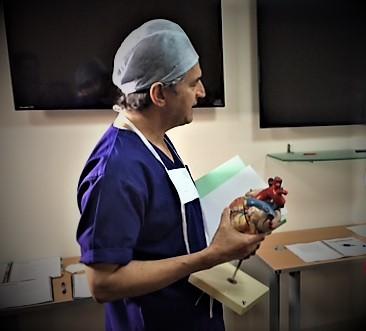
On the 26th March 2019 Bloomberg Businessweek published an article entitled, "The World’s Cheapest Hospital has to Get Even Cheaper”, which describes one of India’s largest private hospital chain's - Narayana Health - response to Modicare, a signature initiative by Prime Minister Narendra Modi to provide basic healthcare for 500m of India’s poorest. Devi Shetty, a world-renowned cardiac surgeon and chairman of Narayana Health, is up for the task. Since Shetty founded Narayana in 2000 it has grown to become a large multi-speciality hospital chain, comprising 31 state-of-the-art tertiary hospitals across 19 cities, employing 16,000 and each year treating over 2.5m patients across more than 30 medical specialities. Shetty’s mission is to provide high quality, affordable healthcare services to the broader population in India and he is convinced that quality and low-cost healthcare are not mutually exclusive. In conjunction with the state of Karnataka, Shetty has created a health insurance plan, which has enrolled some 3m poor people at an annual premium of about US$2.6. More than half of Narayana’s cardiac operations are performed on patients too poor to afford the full cost. In addition to the insurance scheme free or subsidized inpatient care is achieved through philanthropy and a cross-subsidy model, in which higher-income patients pay more for nonclinical amenities, such as private recovery rooms. Since the total charges are still far below the cost of comparable services at other private Indian hospitals, Narayana Health remains an attractive option for such consumers. Narayana Health’s business model is sustainable because of its ability to attract so many patients who can pay full price. The Wall Street Journal has dubbed Shetty, The Henry Ford of Heart Surgery because he applies assembly line concepts to surgery in order to optimize productivity, minimize costs and leverage economies of scale. Because of these innovations the average cost of open-heart surgery, as reported by Narayana Health, is less than US$2,000. The same procedure at a US research hospital typically costs more than US$100,000. Since 2012 HealthPad has worked closely with Devi Shetty. We published our first Commentary about Narayana Health and Devi Shetty’s model for affordable quality healthcare in 2013 and in subsequent years published two more. Shetty and his fellow senior surgeons have contributed over 700 videos to HealthPad’s content library, which address FAQs across 11 clinical pathways. Further, Narayana’s clinicians have featured in HealthPad Commentaries on Chronic obstructive pulmonary disease (COPD), Diabetes and Kidney Disease and Cardiovascular Disease. Because of the large and growing international interest in Shetty’s alternative model for affordable healthcare we re-publish lightly edited versions of HealthPad’s three Commentaries about Narayana Health. |
|

|

|

Directory:
Tags:

First published on 14th August 2013
The UK’s NHS loss is global healthcare’s gain
In 2011 Devi Shetty, an Indian doctor, received the coveted business process innovation award in London from The Economist for his contribution to global healthcare. Trained as a cardiac surgeon in the UK, Shetty returned to India and started a hospital in Bengaluru in 2000. Today, Shetty is on the cusp of changing healthcare in the 21st century.
Shetty’s no-frills hospital chain
In 2012 Shetty launched the first in a chain of no-frills hospitals: a 200-bed single-storey clinic in Mysore, India. Built in 10 months for US$7m, it charges only US$800 for open heart surgery. Shetty rejected the multi-storey hospital model, because it requires costly foundations, steel reinforcements, lifts and complex fire and safety equipment. Much of the Mysore building was pre-fabricated. Its five operating theatres and intensive care units are the only air-conditioned places and families are encouraged to provide supplementary care for patients.
Shetty’s no-frills hospital chain owes its existence to his pioneering hospital in Bengaluru.
Shetty’s no-frills hospital chain owes its existence to his pioneering hospital in Bengaluru.
Shetty’s medical city in Bengaluru
In 2000 Shetty started Narayana Hrudayalaya, a specialist hospital for cardiac surgery, which today performs the highest number of heart surgeries in the world for any one hospital: 7,000 annually and does not compromise on quality. “We are only technicians,” says Shetty. ”We realised that as you do more surgical procedures, your results get better, and your costs go down. In the US the average cardiac surgeon does about 2,000 surgeries in his or her professional lifetime. We have surgeons who have done more than 3,000 surgeries and they’re only in their 30s . . . imagine the expertise that they have, at that young age.”
Medicines and associated hospital costs in India are significantly lower than in the West, but Narayana offers Indian patients value for money. The average price for open heart surgery in Narayana is around US$2,000, compared to US$5,000 in the average private Indian hospital and $20,000 to $100,000 in a US hospital.
Shortly after starting his Bengaluru cardiac centre, Shetty acquired a 35-acre site next door and built a 1,400-bed cancer hospital and a 300-bed eye hospital and created Narayana Hrudayalaya Medical City, which has 3,000 beds in Bengaluru and is run at near to full capacity. In total Narayana has some 7,000 beds in a number of clinics and hospitals throughout India, and plans to expand to 50,000 beds in the next five years.
Medicines and associated hospital costs in India are significantly lower than in the West, but Narayana offers Indian patients value for money. The average price for open heart surgery in Narayana is around US$2,000, compared to US$5,000 in the average private Indian hospital and $20,000 to $100,000 in a US hospital.
Shortly after starting his Bengaluru cardiac centre, Shetty acquired a 35-acre site next door and built a 1,400-bed cancer hospital and a 300-bed eye hospital and created Narayana Hrudayalaya Medical City, which has 3,000 beds in Bengaluru and is run at near to full capacity. In total Narayana has some 7,000 beds in a number of clinics and hospitals throughout India, and plans to expand to 50,000 beds in the next five years.
Tele-medicine
In association with India’s Space Research Organization, Sherry's Bengaluru hospital runs one of the world’s largest tele-cardiology programs, which reaches 100 facilities throughout India, over 50 across Africa and Narayana’s doctors have treated some 70,000 patients remotely. Narayana Health also disperses 5,000 kidney dialysis machines, which makes the company India’s largest kidney-care provider.
Health insurance
With the state of Karnataka, Shetty has created a health insurance plan, which has enrolled some 3m poor people at an annual premium of about US$2.6. Last year, about 60% of Narayana Hrudayalaya cardiac operations were performed on patients too poor to afford the full cost.
Shetty however is not a charity. His hospitals treat a cross section of patients at variable rates but refuse to turn away anyone who cannot pay. “Charity,” he says, “is not scalable. Good healthcare depends on good business.” Shetty’s hospital group earns an after-tax profit of 8%, slightly above the 6.9% average for a US hospital.
Shetty however is not a charity. His hospitals treat a cross section of patients at variable rates but refuse to turn away anyone who cannot pay. “Charity,” he says, “is not scalable. Good healthcare depends on good business.” Shetty’s hospital group earns an after-tax profit of 8%, slightly above the 6.9% average for a US hospital.
Health City Cayman Islands
Shetty has now turned his attention outside of India and is engaged in a joint venture with the government of the Cayman Islands and a group of American institutional investors, to construct and operate a hospital in Grand Cayman to capture share from the North and South American healthcare markets.
The first phase, a 140-bed tertiary care facility for cardiac surgery, cardiology and orthopaedics, was opened in 2014 and benefits from the cost-effective healthcare procedures honed by Shetty over the past decade. By 2020, the Cayman enterprise, which also will have a medical university and an assisted-care living community, is projected to expand into a 2,000-bed Joint Commission International-accredited Health City providing care in all major specialties.
The first phase, a 140-bed tertiary care facility for cardiac surgery, cardiology and orthopaedics, was opened in 2014 and benefits from the cost-effective healthcare procedures honed by Shetty over the past decade. By 2020, the Cayman enterprise, which also will have a medical university and an assisted-care living community, is projected to expand into a 2,000-bed Joint Commission International-accredited Health City providing care in all major specialties.
Super-size hospitals
At a time when the global healthcare debate is emphasising community based preventative strategies, Shetty’s vision is, “affordable healthcare for everyone in super-size hospitals. Today healthcare has got phenomenal services to offer,” he says. “Almost every disease can be cured and if you can't cure patients, you can give them meaningful lives.” Shetty is driven by the fact that a century after heart surgery was developed only 10% of the world’s population can afford it. Each year, India alone needs 2.5m heart operations and yet there are only 90,000 performed.
"Current regulatory structures, policies and business strategies [for healthcare] are wrong,” says Shetty, “If they were right, we should have reached 90% of the world's population." Recently, he shocked a UK audience of health providers by suggesting that it would be better if England only had three centres for cardiac surgery rather than 22.
"Current regulatory structures, policies and business strategies [for healthcare] are wrong,” says Shetty, “If they were right, we should have reached 90% of the world's population." Recently, he shocked a UK audience of health providers by suggesting that it would be better if England only had three centres for cardiac surgery rather than 22.
The Henry Ford of heart surgery
Sir Bruce Keogh, the UK’s former National Medical Director of the NHS Commissioning Board, once suggested that healthcare in England should become more like retail. Shetty thinks like a retailer, views patients as “customers” and has employed mass production techniques used in the early 20th century to automate the American car industry. Known as, “the Henry Ford of heart surgery”, Shetty has demonstrated that high volume complex surgeries mean better outcomes and lower costs. Similar to what Henry Ford did for the auto industry, Shetty has disaggregated clinical procedures into a number of discrete, standardized, unambiguous units, which can be learnt, practiced and repeated. His methods have successfully reduced hospital costs, increased efficiency, enhanced the quality of care and eliminated clinical mistakes. According to Shetty, “Healthcare has huge variation in procedures, outcomes and costs . . . It is the lack of standardization that contributes to hospital mistakes, high costs and low quality of care”.
Change is inevitable
Shetty is convinced that the dearth of health workers worldwide will force change and increase the use of emerging healthcare technologies. An advocate for open technological systems, he says, “In five years a computer will make more accurate diagnoses than doctors. In 10-years it will be mandatory for a doctor to get a second opinion from a computer before starting treatment.”
Takeaways
Not only will Shetty’s Health City Cayman Islands be a lower cost alternative for North and South American patients, it will demonstrate how over-priced and inefficient hospitals in the West are. However, it is not altogether clear whether Shetty’s formula for low-cost high-quality surgical procedures will be effective outside of India. This is mainly because high quality ancillary services associated with complex surgeries, which are relatively inexpensive in India, tend to be patchy and significantly more costly outside of India. Notwithstanding, Shetty is determined to provide the world with a model of affordable healthcare.
Directory:
Tags:
|
|


|